
- All
- Product Name
- Product Keyword
- Product Model
- Product Summary
- Product Description
- Multi Field Search

In mining, quarrying and large-scale earthmoving projects, an excavator bucket is exposed to continuous impact, abrasion and heavy loading. Broken rock, compacted soil, gravel and demolition debris can quickly wear down an ordinary digging bucket, resulting in cracked welds, damaged side plates and frequent replacement of bucket teeth.
Choosing the right heavy duty excavator rock bucket can improve digging performance, reduce unplanned downtime and lower long-term maintenance costs. However, buyers should not select a bucket based only on price, width or excavator tonnage. Material density, working conditions, bucket capacity, mounting dimensions, tooth configuration and wear protection must all be considered.
This guide explains how to select a durable excavator rock bucket for demanding mining and quarry applications.

A heavy duty excavator rock bucket is a reinforced digging attachment designed for hard, dense and abrasive materials. Compared with a general-purpose digging bucket, it normally features a stronger bucket shell, thicker structural plates and additional protection around high-wear areas.
Depending on the application, its main components may include:
Heavy-duty bucket teeth and adapters
Reinforced cutting edge
Side cutters
Side wear plates
Bottom wear strips
Heel shrouds
Reinforced mounting brackets
Replaceable wear protectors
These features help the bucket penetrate compacted materials while protecting the main structure from premature wear.
A heavy duty excavator bucket is commonly used for hard soil, gravel, compacted clay and mixed ground. A rock bucket is generally more suitable for broken rock, blasted stone and abrasive aggregates. For extreme impact and highly abrasive materials, a severe-duty configuration may be required.
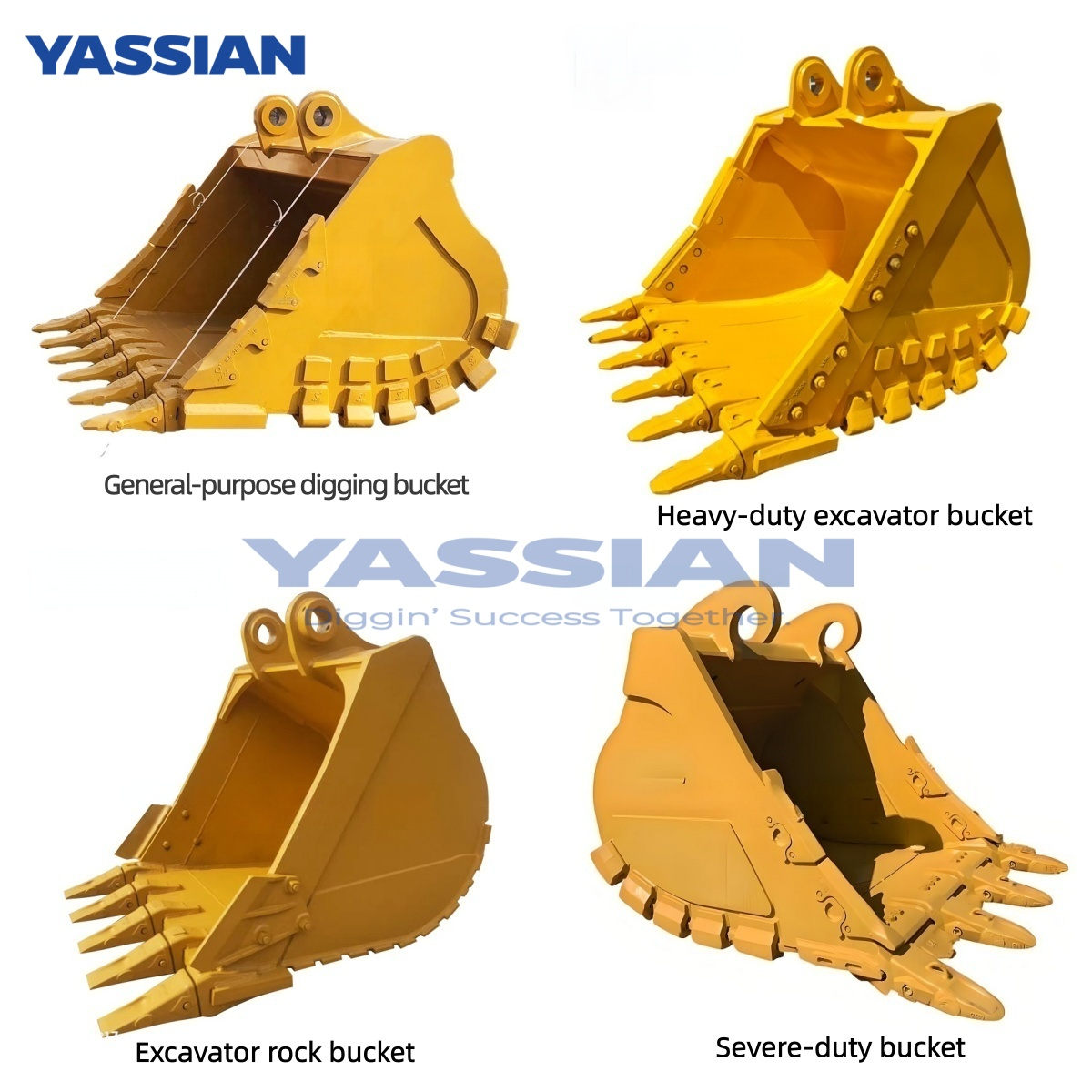
| Excavator Bucket Type | Best For | Key Features | Limitation |
| General-Purpose Digging Bucket | Soil, sand, clay, fine gravel | Balanced capacity, weight and efficiency | Wears faster in rock conditions |
| Hard clay, gravel, mixed materials | Reinforced structure and better durability | Not ideal for heavy rock excavation | |
| Rock, quarry, mining materials | Strong teeth, reinforced lip and wear protection | Heavier than standard buckets | |
| Granite, basalt, demolition debris | Maximum strength and impact resistance | Lower capacity due to extra weight |
The best bucket is therefore not always the heaviest one. Buyers must balance strength, capacity, weight and machine performance.
The first step in choosing a heavy duty excavator rock bucket is identifying the material it will handle.
Important factors include:
Material density
Rock hardness
Particle size
Abrasiveness
Impact level
Moisture content
Material shape and sharpness
Loose gravel and compacted clay do not create the same wear conditions as blasted granite. Sharp rock produces significant abrasion on the bucket bottom, sides and heel areas, while large pieces of rock can create concentrated impact loads on bucket teeth, adapters and welds.
For high-abrasion conditions, the bucket may require additional wear strips and replaceable protectors. For high-impact conditions, structural strength, steel quality and welding integrity become particularly important.
Excavator buckets are not universal. Two machines in the same operating-weight class may use different pins, stick dimensions or coupler systems.
Before ordering, provide the manufacturer with:
Excavator brand and model
Machine operating weight
Pin diameter
Distance between pin centers
Stick width
Coupler type
Required bucket width
Required capacity
Material being excavated
Typical working conditions
Matching a bucket only by excavator tonnage can result in installation problems or poor performance. Accurate mounting measurements are especially important when purchasing a custom excavator bucket or replacing an attachment without an original drawing.
The total bucket weight must also be checked against the excavator's lifting capacity, hydraulic performance and operating stability.
A larger bucket does not automatically produce more material per hour. Bucket capacity must be matched to material density and machine capability.
An oversized bucket may:
Overload the hydraulic system
Reduce machine stability
Increase fuel consumption
Slow the digging cycle
Place additional stress on pins and the boom
Prevent the bucket from filling completely
A bucket that is too small may increase the number of cycles required to complete the work. This reduces productivity and increases machine operating time.
Bucket width is equally important. A narrow rock bucket usually provides better penetration in compacted materials. A wider bucket can move more loose material but may require greater digging force. When handling dense rock or ore, a smaller-capacity reinforced bucket may be safer and more productive than a wide general-purpose bucket.
Buyers should also distinguish between struck capacity and heaped capacity when comparing specifications. Manufacturer figures should be reviewed together with the density and expected fill factor of the working material.
Bucket teeth are the first components to contact the material. Their profile directly affects penetration, digging resistance and service life.
Common options include:
Penetration teeth for compacted ground
Rock teeth for quarry and mining applications
Heavy-duty teeth for high-impact work
Abrasion-resistant profiles for highly abrasive material
The tooth system must be correctly sized for the excavator and bucket. Undersized teeth may wear or break prematurely, while an unnecessarily large system adds weight and cost.
Buyers should also consider how easily the teeth, adapters, pins and retainers can be sourced. A durable bucket still requires regular replacement of wear parts. Using a widely available tooth system can reduce future maintenance delays.
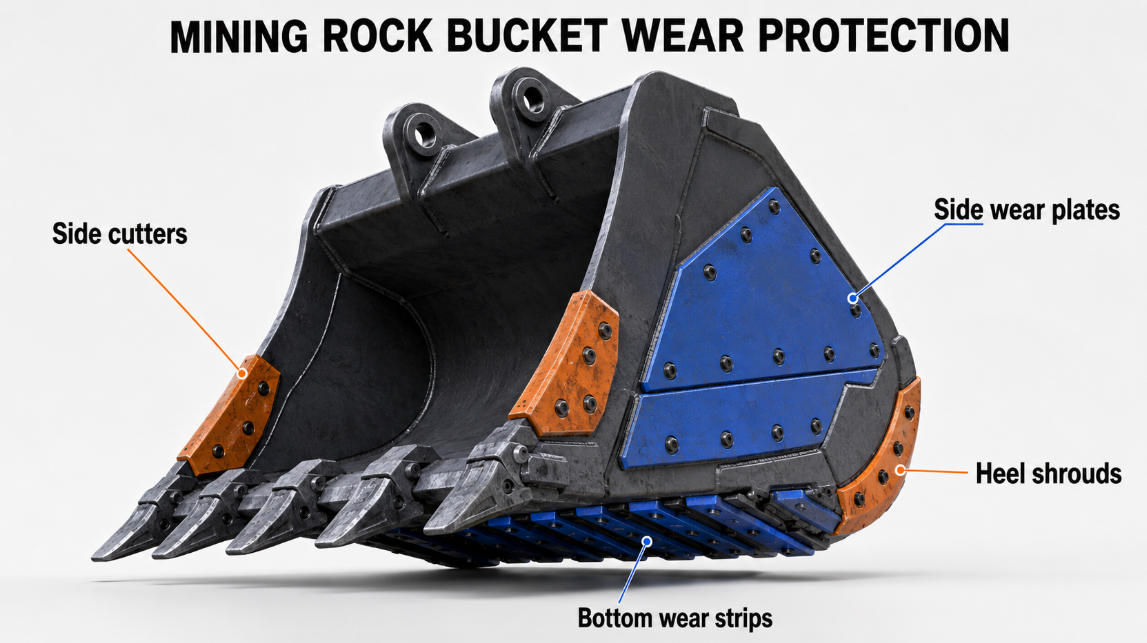
Effective wear protection is one of the most important features of a mining excavator bucket.
Side cutters protect the bucket side plates and can improve penetration by widening the cutting path. Replaceable side cutters are easier and less expensive to change than repairing a severely worn bucket side wall.
These plates protect the external sides of the bucket from contact with rock and abrasive material. They are particularly valuable when the bucket frequently works against trench walls or sharp stone.
Bottom wear strips reduce direct abrasion on the main bottom plate. Their placement and thickness should match the bucket’s working angle and normal wear pattern.
Heel shrouds protect the curved rear corners of the bucket. These areas often experience heavy abrasion when the bucket is curled, dragged or loaded against the ground.
Adding wear protection can extend service life, but excessive reinforcement increases bucket weight. A professional manufacturer should design the protection layout according to the actual application instead of simply adding steel everywhere.
A heavy duty excavator rock bucket must withstand both structural stress and surface wear. Steel selection should therefore be based on the function of each part.
High-strength structural steel may be used for the bucket body and mounting areas, while abrasion-resistant steel is commonly used in cutting edges, wear plates and other high-contact areas. Material claims should ideally be supported by supplier certificates or inspection records.
Welding quality is equally important. Poor penetration, irregular welds or uncontrolled heat input can create weak points that develop into cracks under repeated loading.
Important quality-control procedures include:
Material verification
Dimensional inspection
Pin-hole alignment inspection
Weld inspection
Hardness testing where applicable
Surface inspection
Drawing and fitment confirmation
Accurate dimensions allow easier installation and help maintain proper alignment between the excavator arm, linkage and bucket.
Many premature failures begin with incorrect selection rather than manufacturing defects. Common mistakes include:
Selecting a bucket only by excavator tonnage
Ordering the largest available bucket capacity
Using a general-purpose bucket for continuous rock excavation
Ignoring the density and abrasiveness of the material
Failing to confirm pin and coupler dimensions
Choosing the wrong bucket tooth profile
Comparing suppliers only by price
Ignoring replacement wear-part availability
Adding excessive reinforcement without checking bucket weight
Approving production without drawings or dim
Providing complete application information helps the manufacturer recommend a more appropriate design.
Even a severe-duty bucket requires regular inspection. Operators should check bucket teeth, adapters, retainers, side cutters, wear plates and welds before wear reaches the main structure.
Replace wear parts before they are completely worn through. Continuing to operate with missing teeth or damaged side protectors can transfer impact and abrasion directly to expensive structural components.
Cracks should also be repaired promptly. A small crack around a weld or mounting area may spread under repeated loading and eventually require a major bucket rebuild.
Uneven wear can indicate incorrect tooth selection, bucket misalignment, unsuitable operating techniques or inconsistent material contact. Monitoring these wear patterns helps identify problems before they cause significant damage.
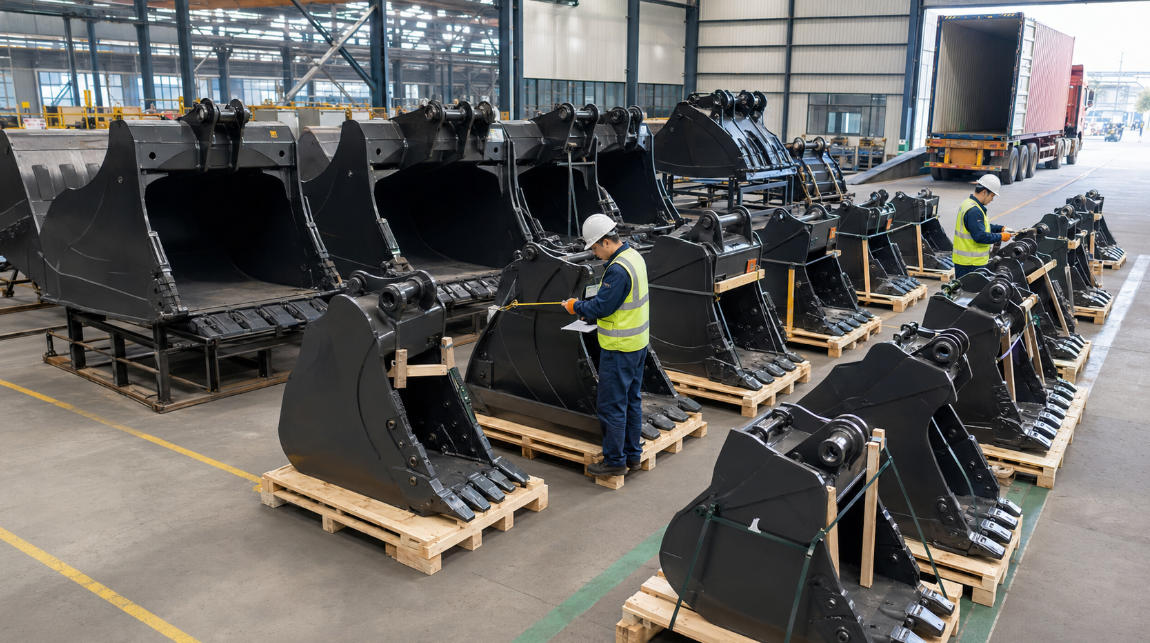
For contractors, equipment dealers and importers, a reliable excavator bucket manufacturer should offer more than a competitive quotation.
Before placing an order, evaluate the supplier's:
Material traceability
Welding and fabrication capability
Technical drawing support
Custom manufacturing experience
Dimensional inspection procedures
Compatibility-confirmation process
Wear-part supply
Export packaging
Production capacity
Delivery control
For a custom bucket, the manufacturer should confirm the machine model, mounting dimensions, required capacity, working material and duty level before production begins.
The right heavy duty excavator rock bucket should deliver a practical balance of structural strength, wear protection, penetration, capacity and weight. The best configuration depends on the excavator, material density, impact level and expected working hours.
For mining, quarrying and abrasive excavation, pay particular attention to the tooth system, cutting edge, side cutters, bottom protection, heel shrouds and manufacturing quality. Accurate mounting measurements and clear working-condition information are essential when ordering a replacement or custom excavator bucket.
A properly matched bucket can improve productivity, reduce maintenance downtime and protect the excavator from unnecessary stress—delivering greater value throughout the attachment's service life.


