- All
- Product Name
- Product Keyword
- Product Model
- Product Summary
- Product Description
- Multi Field Search

Bucket teeth are one of the most critical Ground Engaging Tools (GET) components. Although bucket teeth may look like simple wear parts, the right tooth design can directly influence digging efficiency, fuel consumption, machine productivity, and operating costs.
When selecting replacement bucket teeth, many equipment dealers, contractors, and fleet managers face an important decision: Should they choose heavy duty bucket teeth or standard bucket teeth?
The answer depends on the working environment, material hardness, machine application, and expected service life.
This guide compares heavy duty bucket teeth vs standard bucket teeth to help GET distributors and equipment users choose the most suitable solution.
The main difference is wear resistance and application capability.
Heavy duty bucket teeth are designed for severe excavation conditions where high impact and abrasion are expected, while standard bucket teeth are designed for general digging applications with moderate wear requirements.
Heavy duty teeth focus on:
Maximum durability
Strong impact resistance
Longer service life
like: MA120E Heavy Duty Excavator Bucket Teeth
Standard teeth focus on:
General-purpose performance
Balanced wear resistance
Lower replacement cost
Feature | Heavy Duty Bucket Teeth | Standard Bucket Teeth |
Application | Mining, quarry, rock, heavy excavation | General digging, soil, sand, light construction |
Material thickness | Reinforced design | Standard profile |
Wear resistance | Higher | Medium |
Impact resistance | Stronger | Suitable for normal loads |
Service life | Longer in harsh environments | Ideal for regular applications |
Cost efficiency | Better for severe conditions | Better for general use |
Heavy duty bucket teeth usually feature:
Reinforced tooth body
Increased material thickness
Stronger nose structure
Optimized alloy steel composition
These design improvements allow them to withstand higher stress during:
Rock excavation
Mining operations
Quarry loading
Heavy earthmoving

2713-1219 Standard Bucket Tooth Point Excavator DH300 Product Type
Standard bucket teeth typically use a lighter profile suitable for:
Soil digging
Sand handling
Construction projects
Agricultural applications
YASSIAN provides both heavy duty and standard bucket teeth solutions to match different excavation requirements.
No. Heavy duty bucket teeth are not always the best choice.
Using heavy duty teeth in normal soil conditions may increase unnecessary cost, while using standard teeth in rock or mining applications may cause premature failure.
The correct choice depends on:
Excavation material
Machine size
Working conditions
Required service life
Why?
Because materials such as:
Granite
Limestone
Hard rock
Abrasive aggregates
create high impact forces and rapid wear.
Heavy duty teeth maintain their shape longer, helping machines continue efficient digging cycles.
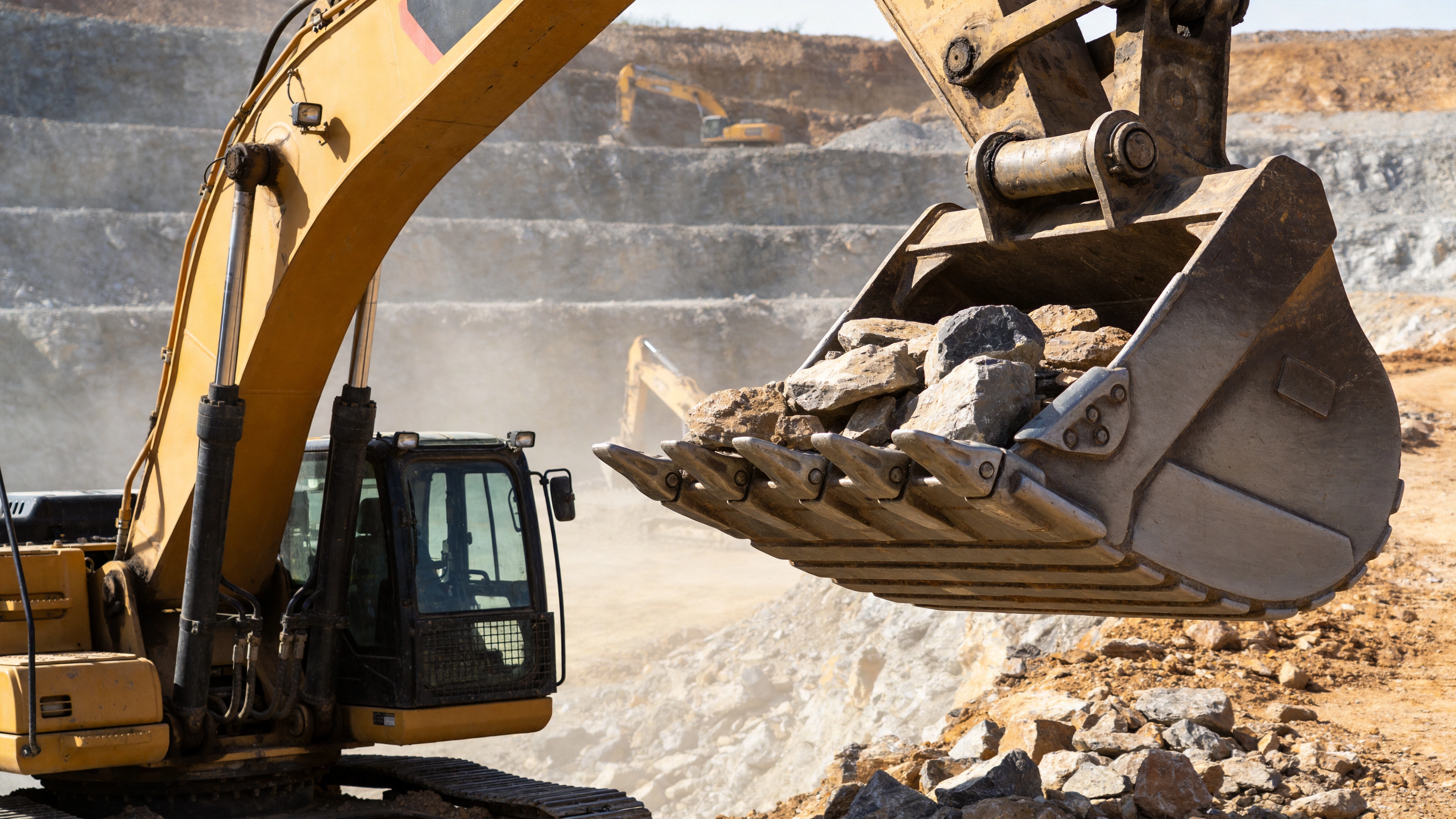
Large excavators generate higher breakout forces.
Standard teeth may experience:
Faster tip wear
Tooth breakage
Reduced penetration performance
Heavy duty bucket teeth provide stronger resistance against these conditions.
YASSIAN heavy duty bucket teeth are manufactured for excavators and loaders requiring reliable performance in demanding environments.

Heavy Duty Bucket Teeth for Excavators and Loaders
Standard bucket teeth are suitable for:
Soil excavation
Trenching
Landscaping
Material loading
They provide a practical balance between:
Performance
Cost
Replacement frequency
For many daily excavation tasks, standard teeth offer excellent value.
In harsh applications, heavy duty bucket teeth usually provide longer wear life.
However, lifespan depends on:
Material hardness
Excavation conditions
Operator habits
Correct installation
The service life advantage comes from several factors:
High-quality GET manufacturers use alloy steel and heat treatment processes to improve:
Hardness
Toughness
Abrasion resistance
This helps teeth resist deformation and breakage.
Heavy duty designs distribute stress more effectively.
This reduces:
Stress concentration
Premature cracking
Uneven wear
In rock and mining environments, bucket teeth experience repeated impact.
A stronger tooth structure helps maintain:
Penetration ability
Bucket productivity
Machine efficiency
Follow three key factors:
Machine compatibility
Material condition
Operating requirements
Buyer Checklist
Before purchasing bucket teeth, confirm:
Check:
Excavator or loader model
Bucket size
Adapter system
Tooth series
Incorrect matching can cause:
Loose fitting
Uneven wear
Tooth failure
Working Condition | Recommended Tooth Type |
Sand | Standard bucket teeth |
Clay | Standard or penetration teeth |
Gravel | Heavy duty teeth |
Rock | Heavy duty / rock teeth |
Mining | Heavy duty GET teeth |
Different profiles serve different purposes.
For Examples:
General Purpose Teeth
Everyday excavation
Penetration Teeth
Hard soil and compact materials
Heavy Duty Teeth
Severe wear environments
As a professional Ground Engaging Tools manufacturer, YASSIAN supplies bucket teeth, adapters, cutting edges, and other wear parts for construction and mining equipment.
YASSIAN focuses on:
Alloy steel manufacturing
Wear-resistant GET solutions
OEM replacement compatibility
Custom production capability
Quality-controlled manufacturing
The product range covers popular equipment brands and applications, helping distributors and contractors source reliable aftermarket GET parts.
Choosing between heavy duty bucket teeth and standard bucket teeth depends on your machine application and operating environment.
Heavy duty bucket teeth are the better choice for:
Mining
Quarrying
Rock excavation
Severe wear conditions
Standard bucket teeth are ideal for:
General construction
Soil digging
Everyday excavation
Selecting the correct bucket tooth improves productivity, reduces downtime, and lowers total operating costs.
For equipment dealers and GET distributors, partnering with an experienced manufacturer like YASSIAN ensures consistent quality, reliable supply, and optimized wear solutions for every application.