
- All
- Product Name
- Product Keyword
- Product Model
- Product Summary
- Product Description
- Multi Field Search

When a bucket wears through in a narrow strip, covering the entire surface with more steel may not be the most useful starting point. When wear extends across a broad panel, adding isolated blocks may leave important areas exposed. Choosing between chocky bars and wear plates starts with locating the wear and understanding how it develops.
For distributors, mines and repair companies, the purchasing decision should connect the material, coverage and installation method with the actual bucket. This guide compares bimetallic chocky bars with abrasion-resistant steel plate and explains what to check before requesting a quotation.
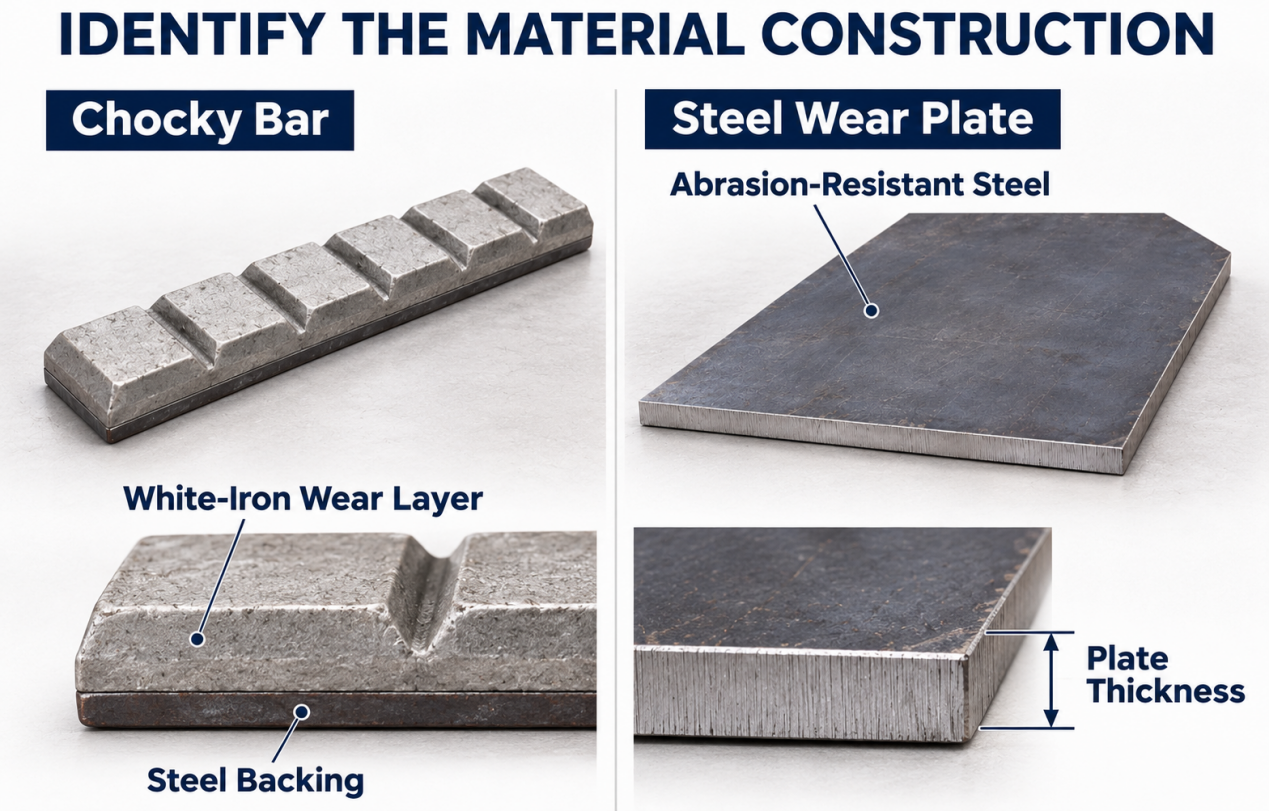
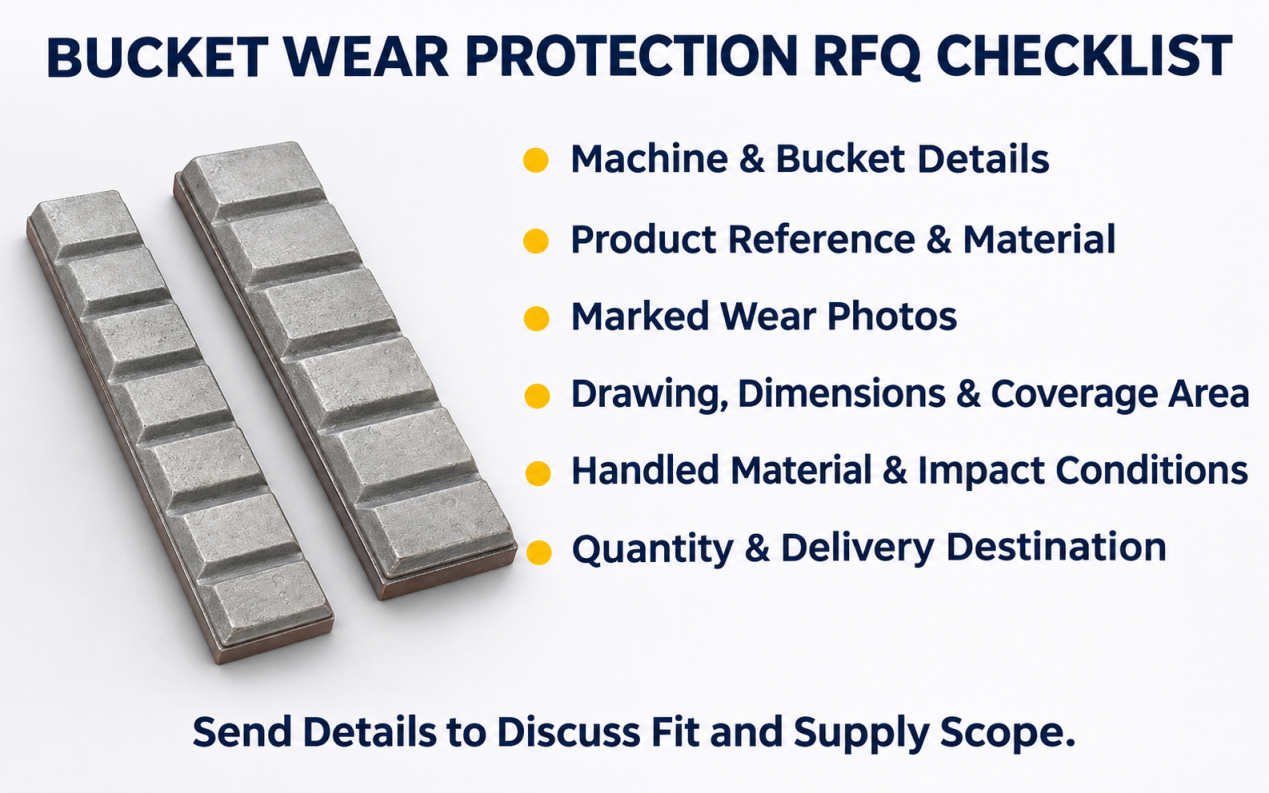
Chocky bars are compact wear-protection strips. In a common bimetallic design, a hard white-iron wear face is bonded to a steel backing. The backing provides the attachment interface, while the exposed wear material protects the selected area.
Some designs include segmentation or notches that support fitting to contours under the manufacturer's instructions. These features do not mean every bar can be bent, cut or welded using the same method.
"Wear plate" is a broader term. Here, it means abrasion-resistant steel plate cut or formed into a protective liner. Chromium-carbide overlay plate and cast bimetallic liners are separate alternatives with different fabrication requirements. Identify the offered material rather than comparing everything under one label.
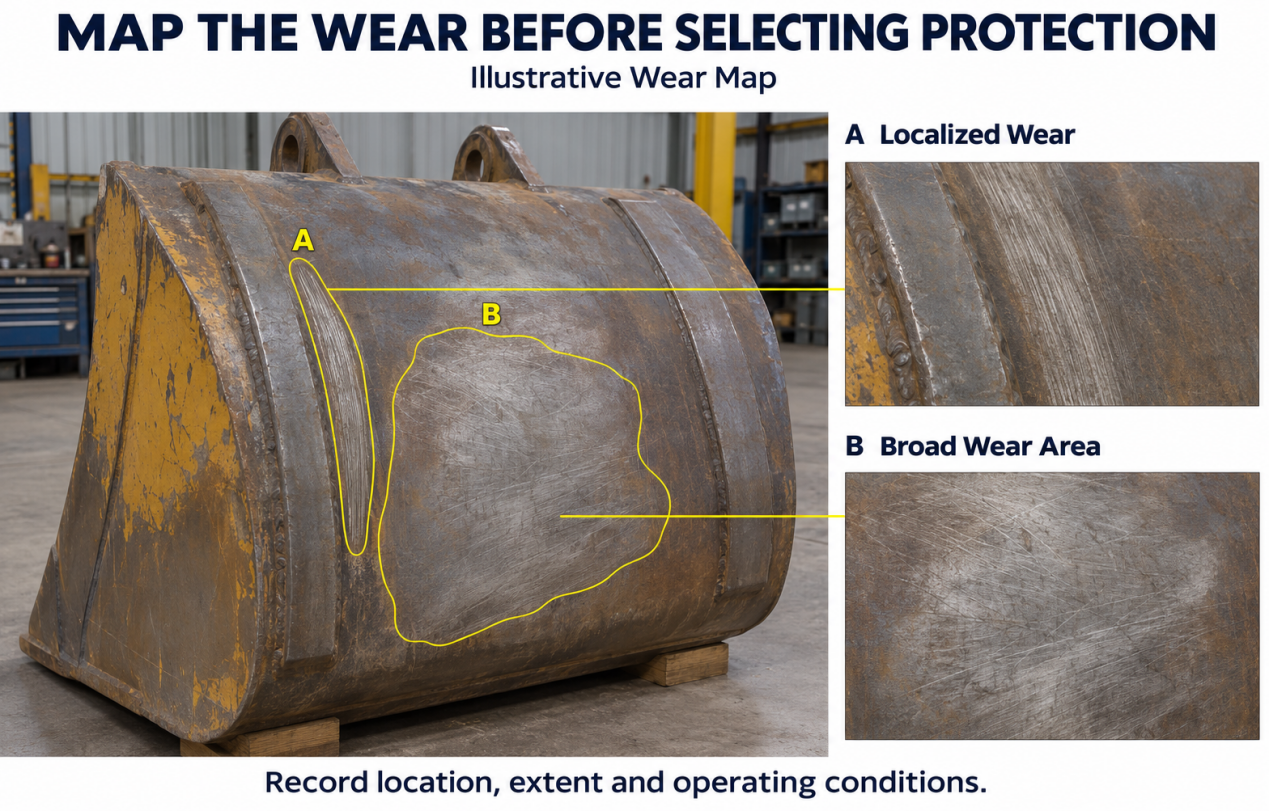
Clean and inspect the area, then mark where material loss is concentrated. Record whether wear appears as a narrow path, a broad thinned area, grooves, dents or damaged existing protection.
Add photographs showing the whole bucket and close-ups of each location. Identify whether the surface is inside or outside the bucket, how material moves across it, and where direct impacts occur.
This record helps separate the need for wear coverage from the need for structural repair. If the bucket shell is cracked or substantially damaged, have its condition assessed before planning an overlay. Wear protection should not be assumed to restore the original structure.
Chocky bars can be considered where protection is needed in a limited area or where a larger liner is difficult to fit. Manufacturer applications include bucket surfaces and contoured locations, sometimes alongside other wear products.
Their compact format gives the designer options for targeting a defined wear path. That can be useful around local wear zones where the surrounding surface does not require the same coverage.
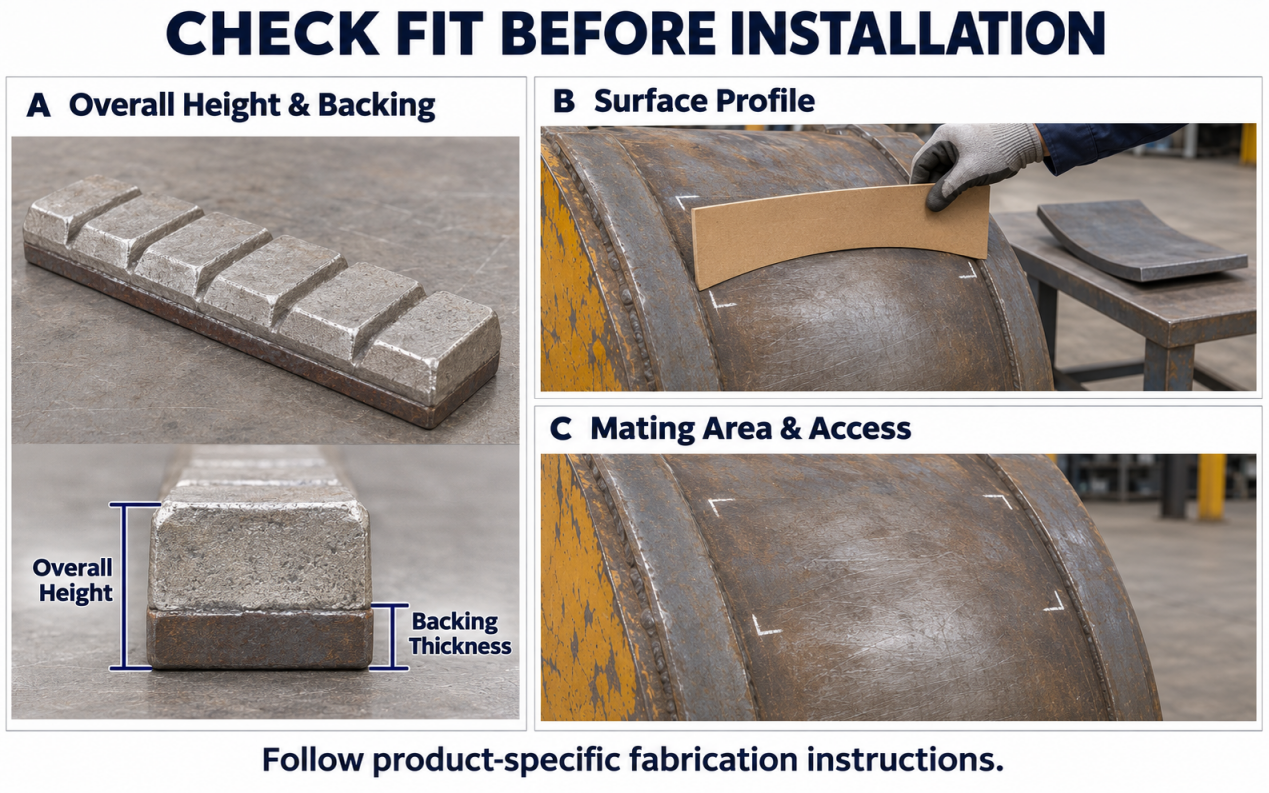
Check the bar's complete dimensions, including the wear layer, backing and overall height. Available clearance and the position of neighbouring components matter. Do not assume two bars with the same width have the same profile or backing design.
Ask for a proposed layout before ordering quantities. The layout should identify the protected area, attachment access and how worn pieces will eventually be removed.
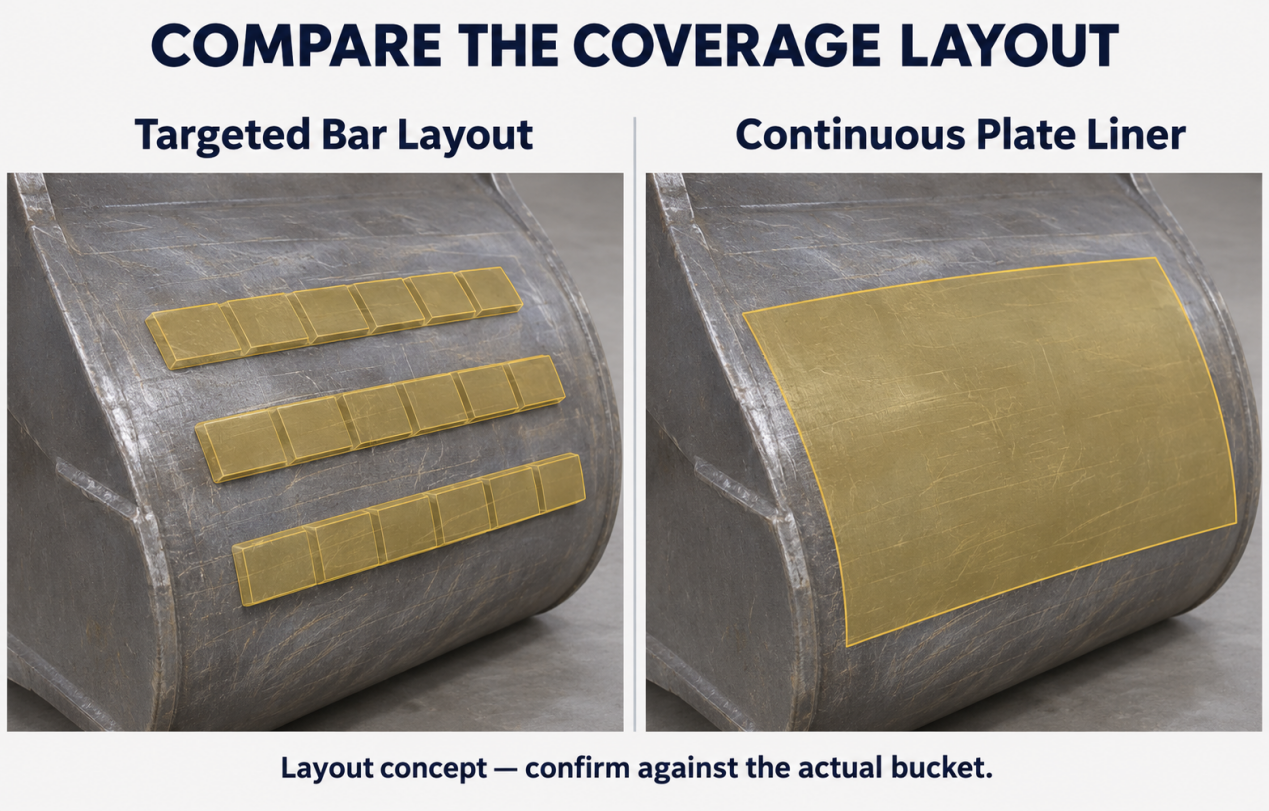
Abrasion-resistant steel plate is an option when the design calls for broader coverage or a continuous liner profile. It can be specified as a shaped panel rather than a collection of individual strips.
Plate selection still requires more than a thickness or hardness description. Confirm the steel grade, required toughness and the supplier's cutting, forming and welding recommendations. A grade suitable for one combination of abrasion, impact and fabrication may not suit another.
For curved bucket surfaces, check the required profile against the selected grade's forming guidance. Do not assume a flat plate will fit simply because its length and width match the area.
Selection question | Chocky bars | Steel wear plates |
Is wear concentrated locally? | Evaluate targeted strips | Evaluate a cut-to-shape piece |
Is broad coverage needed? | Review gaps and total layout | Evaluate a continuous liner |
Is the surface curved? | Confirm the specific bar's fitting limits | Confirm grade-specific forming limits |
How will it be attached? | Check backing and approved procedure | Check plate and parent-steel procedure |
How will it be replaced? | Plan access to individual pieces | Plan removal of the liner section |
Neither format is automatically the lower-cost choice once fabrication, installation and replacement work are included.
Describe the material being handled and how it contacts the bucket. Sliding abrasive material, occasional impacts and repeated heavy blows should not be treated as identical duties.
Hardness alone does not describe the complete response to impact or the suitability of an attachment. Ask the supplier to explain the basis for its recommendation and identify any application restrictions. Avoid transferring another manufacturer's wear-life claims to the proposed product.
Installation also deserves a documented review. Bimetallic products and steel plate have different fabrication considerations. Obtain instructions covering both the wear product and the actual parent material, including permitted cutting, forming, welding and heat control.
Do not copy a bar supplier's procedure onto an unrelated plate grade, or assume that a weldable backing removes every installation constraint. The approved procedure and the condition of the bucket must guide the work.
A price per kilogram or per piece can be misleading when the quotations cover different areas. Give suppliers the same marked photographs, dimensions and intended duty.
Ask each quotation to identify:
Product type, reference and material specification.
Overall dimensions and any separate backing dimensions.
Quantity and proposed coverage layout.
Installation guidance and required preparation.
Available inspection or traceability documents.
Packing, delivery destination and supply scope.
Where possible, compare the cost of the complete installed arrangement and the work needed for its next replacement. Without comparable operating records, do not assign a guaranteed service life or a cost-saving percentage.
After installation, record the date, operating exposure, wear locations and replacement work. Those observations can support the next selection more effectively than a general claim that one material always lasts longer.
YASSIAN is a Ningbo-based factory supplier of construction machinery wear parts, G.E.T. and related aftermarket replacement components, established in 2002.
For a chocky bar or bucket wear-protection enquiry, send your machine and bucket details, existing part references, marked photographs, drawing or key dimensions, quantity, application and delivery destination. Tell us whether you need individual replacement pieces or help defining the proposed supply layout.
We can discuss product identification, dimensional checks and the supply scope before quotation approval.


