
- All
- Product Name
- Product Keyword
- Product Model
- Product Summary
- Product Description
- Multi Field Search
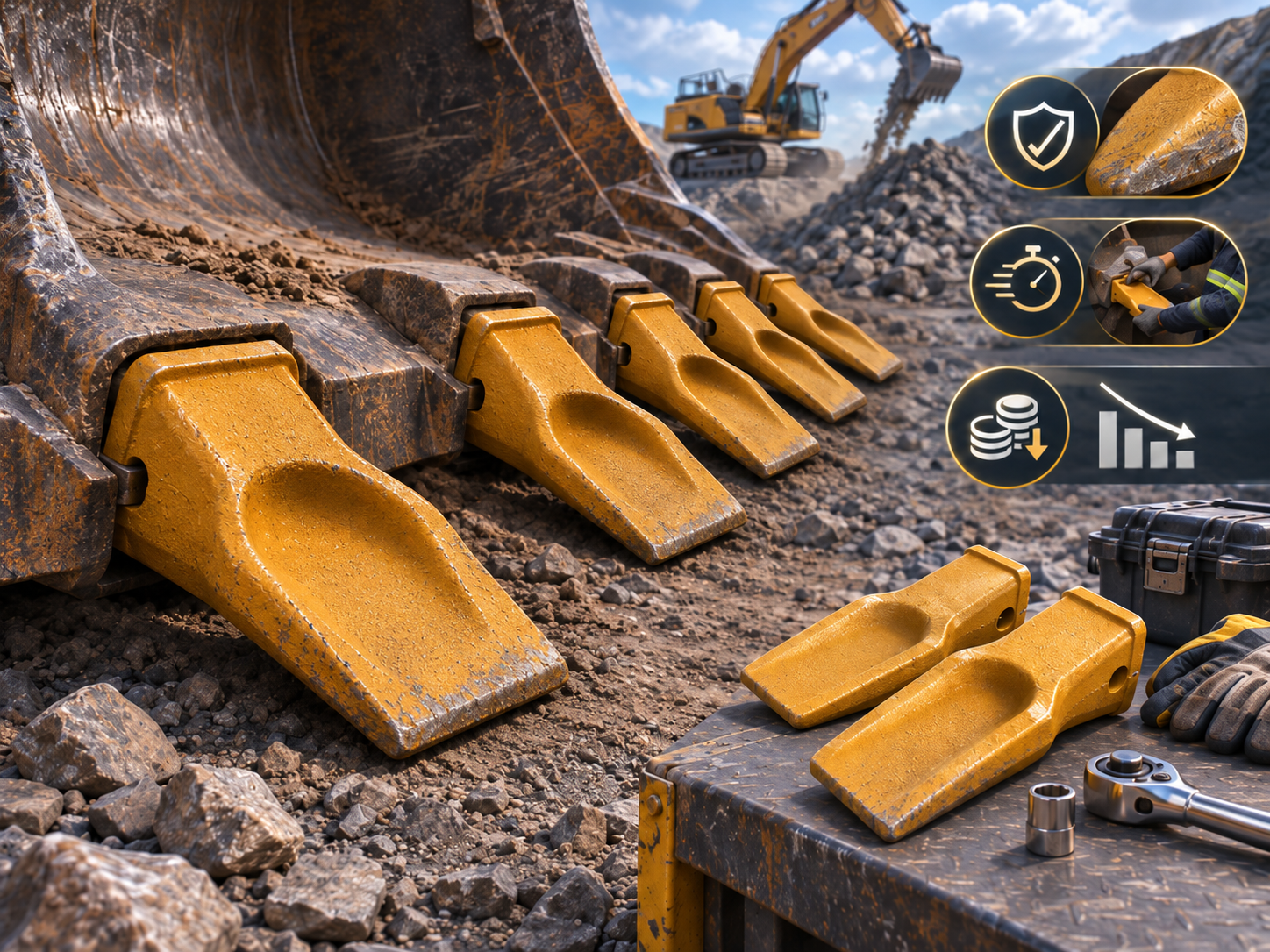
In mining, quarrying, and heavy-duty excavation, worn bucket teeth can become a hidden source of operating costs. Frequent replacements, unexpected machine stoppages, and declining digging efficiency directly affect profitability.
For equipment owners and fleet managers, heavy abrasion bucket teeth offer a practical way to improve wear life and reduce maintenance expenses—but how much can they actually save?
Quick Answer: Heavy abrasion bucket teeth can reduce excavator maintenance costs by providing additional usable wear material, improved abrasion resistance, and longer replacement intervals in suitable applications. Fewer tooth changes mean less maintenance labor, reduced downtime, and lower replacement costs per operating hour. Actual savings depend on material abrasiveness, tooth quality, equipment compatibility, and operating conditions.
Unlike general-purpose bucket teeth, heavy abrasion designs prioritize durability in environments where continuous friction rapidly removes metal from the tooth surface.

9N4253 Heavy Abrasion Bucket Tooth for Cat-Style J250
Standard bucket teeth may wear rapidly when exposed to abrasive materials such as silica-rich sand, gravel, and crushed rock.
Heavy abrasion bucket teeth are designed to resist this wear through:
Wear-resistant alloy steel: Provides a balance of surface hardness and structural toughness.
Optimized heat treatment: Improves material properties for demanding excavation conditions.
Additional wear material: Helps extend usable service life before replacement becomes necessary.
Reinforced tooth geometry: Supports more consistent wear performance under abrasive loads.
Longer tooth life can reduce annual replacement frequency, saving parts, labor, and maintenance time.
Every bucket tooth replacement requires maintenance resources and may interrupt production.
In high-utilization mining operations, the cost of lost machine availability can exceed the purchase price of the replacement teeth.
Heavy abrasion teeth can help by:
Extending intervals between scheduled replacements.
Reducing wear-related maintenance interventions.
Limiting unexpected stoppages caused by excessive tooth wear.
However, choosing the correct tooth-and-adapter system is essential. Poor fitment or insufficient impact toughness can undermine these benefits.
Excessively worn teeth can expose adapters and bucket lips to abrasive material, potentially creating more expensive repair requirements.
Properly selected wear-resistant bucket teeth act as replaceable protection for these components.
Replacing teeth before their safe wear limit helps prevent damage to adapters, retaining systems, and surrounding bucket structures.

As bucket teeth wear and lose their effective cutting profile, digging resistance may increase.
A properly designed heavy abrasion tooth can help maintain penetration and bucket-loading performance throughout its usable life.
This contributes to more predictable excavation cycles and may help control fuel consumption per ton of material moved.
Important: Maximum wear resistance does not automatically mean maximum productivity. Tooth geometry must balance penetration, abrasion resistance, and impact strength.
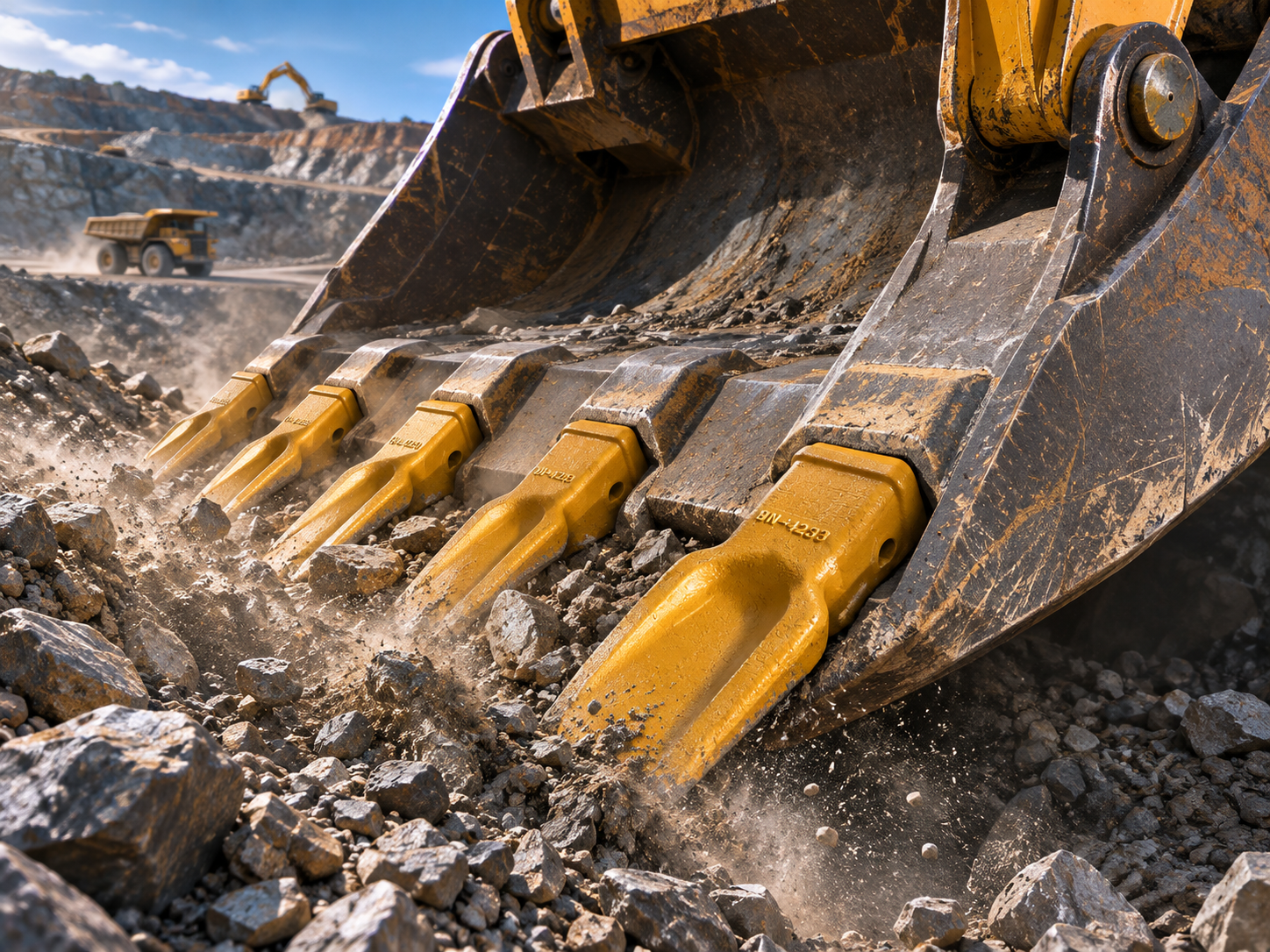
Consider a hypothetical excavator operating for 2,000 productive hours in an abrasive quarry environment.
Cost Factor | Standard Bucket Teeth | Heavy Abrasion Bucket Teeth |
Tooth set purchase price | $250 | $400 |
Average service life | 250 hours | 400 hours |
Tooth sets required | 8 | 5 |
Replacement events | 7 | 4 |
Labor and downtime cost per replacement | $390 | $390 |
Total tooth purchase cost | $2,000 | $2,000 |
Total replacement labor and downtime | $2,730 | $1,560 |
Total evaluated cost | $4,730 | $3,560 |
Potential Savings: $1,170, or approximately 24.7%.
Illustrative calculation only, not a YASSIAN field test. The model assumes 1.5 hours per replacement event, $60/hour in labor, and $200/hour in downtime cost. It excludes initial installation, adapter repairs, and changes in production efficiency.
For a more complete purchasing comparison, use:
GET Cost per Operating Hour = (Tooth Purchase Cost + Replacement Labor + Downtime Cost + Related Repair Costs) / Productive Operating Hours
The important takeaway is that the lowest purchase price does not necessarily deliver the lowest operating cost.
Heavy abrasion bucket teeth are particularly valuable when abrasive wear is the primary reason for frequent replacement.
Working Environment | Selection Consideration |
Sand and gravel extraction | Prioritize abrasion resistance and usable wear material |
Quarry aggregate handling | Balance abrasion resistance and impact toughness |
Abrasive ore excavation | Consider reinforced designs and verified wear performance |
Hard rock with severe impact | Prioritize impact strength alongside wear resistance |
General soil excavation | Standard or general-purpose teeth may be more economical |
Before purchasing, evaluate operating conditions, existing tooth wear patterns, adapter compatibility, and maintenance history.
For fleet managers, the most useful performance indicators are cost per operating hour, cost per ton moved, and unplanned downtime hours.
As a professional ground engaging tools manufacturer, YASSIAN supplies aftermarket bucket teeth, adapters, and other GET wear parts for construction, mining, quarrying, and earthmoving equipment.
Our manufacturing capabilities include alloy-steel processing, heat treatment, and wear-resistant product development, with tungsten-carbide wear-enhancement technology available for applicable products.
We support B2B customers through:
OEM-compatible replacement bucket teeth for major equipment brands.
Different tooth profiles for varying excavation conditions.
Custom manufacturing based on drawings, samples, and specifications.
Product selection support for wholesale distributors and equipment operators.
Explore our excavator bucket teeth range to identify suitable wear-part solutions for your equipment.
Heavy abrasion bucket teeth are more than replacement wear parts—they are an important factor in excavator maintenance efficiency and operating costs.
By selecting abrasion-resistant teeth that match your working conditions, you can potentially extend replacement intervals, protect bucket components, and reduce costly downtime.
Looking for reliable wear-resistant bucket teeth for your mining or construction equipment?
Contact YASSIAN with your excavator model, bucket tooth part number, and working conditions to discuss suitable aftermarket GET solutions and wholesale pricing.


