
- All
- Product Name
- Product Keyword
- Product Model
- Product Summary
- Product Description
- Multi Field Search

The undercarriage system is one of the most important and expensive parts of a crawler excavator. While components such as track chains and sprockets often receive more attention, smaller parts like the carrier roller also play a critical role in maintaining machine performance and extending service life.
A carrier roller, also known as an excavator top roller or upper roller, supports the upper section of the track chain and helps maintain smooth track movement. When a carrier roller becomes worn or damaged, it can affect track alignment, increase wear on other undercarriage components, and lead to unexpected downtime.
However, construction companies, mining contractors, and excavator parts distributors often face questions regarding how to select high-quality excavator carrier roller.
This guide explains what a carrier roller is, how it works, its structure, common failure signs, replacement tips, and how to choose the right product for your machine.

A carrier roller is an important component installed on the upper frame of crawler excavators, bulldozers, and other tracked machines.
Unlike track rollers that support the entire machine weight from below, carrier rollers are positioned above the track chain and mainly support the weight of the upper track section.
The main functions of an excavator carrier roller include:
During machine operation, the track chain continuously moves around the undercarriage system. The carrier roller supports the upper part of the track chain to prevent excessive sagging and vibration.
Without a properly functioning carrier roller, the track chain may move unevenly, causing additional stress on:
Track links
Track shoes
Sprocket teeth
Front idler
A quality carrier roller allows the track chain to move smoothly with lower resistance.
This helps:
Improve travel stability
Reduce friction
Minimize unnecessary wear
Improve overall undercarriage efficiency
A damaged carrier roller can create problems throughout the entire undercarriage system.
For example:
A worn roller → unstable track movement → increased chain wear → higher maintenance cost.
Therefore, maintaining carrier rollers is an important part of excavator maintenance.
The working principle of a carrier roller is simple but important.
When the excavator moves, the sprocket drives the track chain. As the track chain circulates around the undercarriage, the upper section passes over the carrier roller.
The carrier roller rotates together with the moving track chain, reducing friction between the track chain and the frame.
The working process can be explained as:
Engine Power → Sprocket Rotation → Track Chain Movement → Carrier Roller Support → Smooth Machine Travel
Although the carrier roller does not directly drive the machine, it helps maintain correct track positioning and ensures the undercarriage operates efficiently.
A high-quality excavator top roller should provide:
Smooth rotation
Strong load resistance
Excellent sealing performance
Long wear life
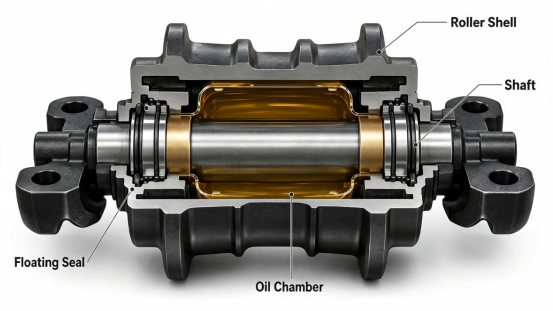
A carrier roller is a precision-engineered component consisting of several key parts. Understanding its structure helps buyers evaluate product quality.
The roller shell is the external part that contacts the track chain.
It must withstand:
Continuous rotation
Mechanical pressure
Dust and abrasive materials
High-quality carrier rollers usually use alloy steel with proper heat treatment to improve:
Hardness
Wear resistance
Impact resistance
Poor-quality roller shells may wear quickly, causing uneven track movement and reduced service life.
The shaft connects the carrier roller to the mounting bracket.
A durable shaft requires:
High material strength
Accurate machining
Good bending resistance
If the shaft is poorly manufactured, problems such as deformation or premature failure may occur.
The bushing reduces friction between internal moving parts.
Its main functions include:
Supporting rotation
Reducing internal wear
Improving operating stability
A high-quality bushing helps extend the service life of the entire carrier roller assembly.
The floating seal is one of the most important parts inside a carrier roller.
Its purpose is to:
Keep lubricating oil inside
Prevent dust and water from entering
Protect internal components
For excavators working in mining, quarry, and muddy environments, seal quality directly affects roller durability.
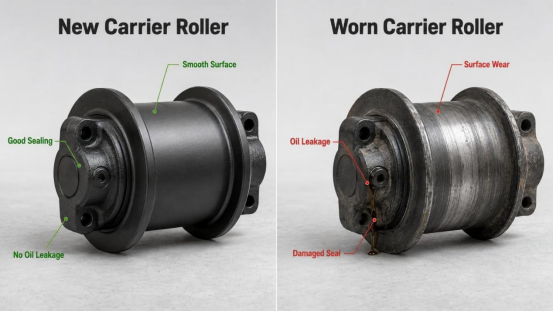
Even a high-quality carrier roller will eventually wear after long-term operation. Identifying early warning signs can help prevent expensive repairs.
Oil leakage is one of the most common carrier roller problems.
Possible causes include:
Damaged seals
Internal wear
Excessive operating temperature
When lubrication is lost, internal components may wear quickly and the roller may eventually stop rotating.
Damage to the support rollers may produce noises such as grinding, clicking, or metal-on-metal friction sounds.
These noises usually indicate problems inside the roller, such as:
Bearing damage
Bush wear
Poor lubrication
If the track rollers do not rotate smoothly, the tracks may vibrate, causing the machine to sway more violently due to unstable movement.
In severe cases, the carrier roller may stop rotating completely.
A seized carrier roller can cause:
Excessive track chain wear
Increased travel resistance
Damage to surrounding components
At this stage, replacement is usually necessary.
Several factors can shorten carrier roller service life.
Over-tight tracks create excessive pressure on rollers and increase friction.
Loose tracks may cause:
Poor alignment
Increased vibration
Abnormal wear
Maintaining correct track tension helps maximize carrier roller life.
Excavators operating in difficult environments require stronger undercarriage components.
Examples include:
Mining Applications | Construction Applications |
Rock | Mud |
Heavy impact | Sand |
Abrasive materials | Dirt |
These environments increase the demand for durable excavator undercarriage parts.
Choosing cheap replacement parts may reduce initial costs but often increases long-term expenses.
Low-quality carrier rollers may have:
Poor heat treatment
Weak materials
Low-quality seals
Short service life
For distributors and contractors, reliable aftermarket carrier rollers can provide a cost-effective alternative when manufactured according to proper standards.
Knowing when to replace a carrier roller helps prevent larger undercarriage failures.
Consider replacement when:
✔ The roller leaks oil continuously
✔ The roller does not rotate smoothly
✔ Severe wear appears on the roller surface
✔ Abnormal noise continues during operation
✔ Track movement becomes unstable
Regular inspection is recommended, especially for machines working in mines, quarries, and heavy construction sites.
Selecting the correct carrier roller requires more than matching appearance.
Before purchasing, buyers should confirm:
To ensure the correct product is identified quickly, please provide the excavator brand, equipment model, and serial number.
YASSIAN supplies upper rollers for common excavator brands on the market, including:
Caterpillar
Komatsu
Hitachi
Volvo
Hyundai
Doosan
Important specifications include:
Roller diameter
Roller width
Shaft size
Mounting dimensions
Incorrect dimensions may cause installation problems or accelerated wear.
For overseas distributors and importers, supplier capability is also important.
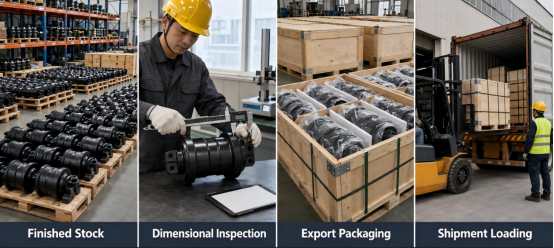
A reliable carrier roller manufacturer should have:
Quality steel materials
Heat treatment process
Precision machining equipment
Strict inspection procedures
Stable production capacity
Many buyers compare OEM and aftermarket options when purchasing undercarriage parts.
OEM support rollers typically carry the manufacturer's brand, they align closely with original specifications and offer superior compatibility, though they come at a higher price and involve longer lead times.
Advantages:
Competitive pricing
Flexible supply
Suitable for replacement markets
A professional aftermarket manufacturer can produce carrier rollers with:
Accurate dimensions
Reliable materials
Strong wear resistance
Good sealing performance
For distributors and repair companies, quality aftermarket carrier rollers are often an effective solution to reduce operating costs.
To maximize carrier roller performance, pay attention to the following points during daily operation:
Inspect Regularly
Keep the Undercarriage Clean
Maintain Proper Track Adjustment
Replace Damaged Components Early
Although a carrier roller is a relatively small component, it has a major impact on crawler excavator performance and undercarriage durability.
A high-quality excavator carrier roller helps maintain smooth track movement, reduce wear, and lower maintenance costs.
For construction companies, mining operators, and excavator parts distributors, choosing reliable crawler excavator undercarriage parts from an experienced manufacturer is the key to achieving longer service life and better equipment performance.
Do you need carrier rollers? Contact YASSIAN to select high-quality rollers for your equipment.


