
- All
- Product Name
- Product Keyword
- Product Model
- Product Summary
- Product Description
- Multi Field Search

Bucket adapter nose wear should be checked when replacing bucket teeth, especially if a tooth has worked loose or gone missing. A new tooth does not establish that the adapter underneath remains serviceable. Inspect the nose, tooth pocket, retention components and adapter attachment before deciding what to replace.
The useful outcome is a documented decision: retain a verified serviceable assembly, replace the affected components, or obtain a technical assessment. This guide helps maintenance teams and parts buyers collect the evidence for that decision without relying on a universal clearance or wear limit.
The adapter nose supports the replaceable tooth, while the retention arrangement keeps the components secured according to the system design. Their functions are related, but they require separate checks.
A loose tooth may involve worn mating surfaces, damaged retention components or an incorrect combination of parts. Movement alone does not identify which condition is responsible. Conversely, a pin that appears secure does not prove that the supporting nose profile is acceptable.
Record whether the problem developed during service or appeared immediately after a replacement. Keep the old and proposed component references together. That history helps distinguish an inspection question from a compatibility question before another set of teeth is ordered.
Identify the tooth, adapter and retention references, including readable suffixes. Record the machine and bucket details, but use the tooth system actually installed as the basis for component checks.
Before close inspection or removal, secure the equipment and support the bucket according to the applicable maintenance procedure. Use the system's prescribed removal tools and instructions.
Clean away material that hides the contact and locking areas without grinding or reshaping them. Photograph the components before and after cleaning where the difference helps explain what was found.
Number the tooth positions across the bucket and use those numbers consistently. A record saying “position three, underside of nose” is more useful than several unlabelled close-ups of different adapters.
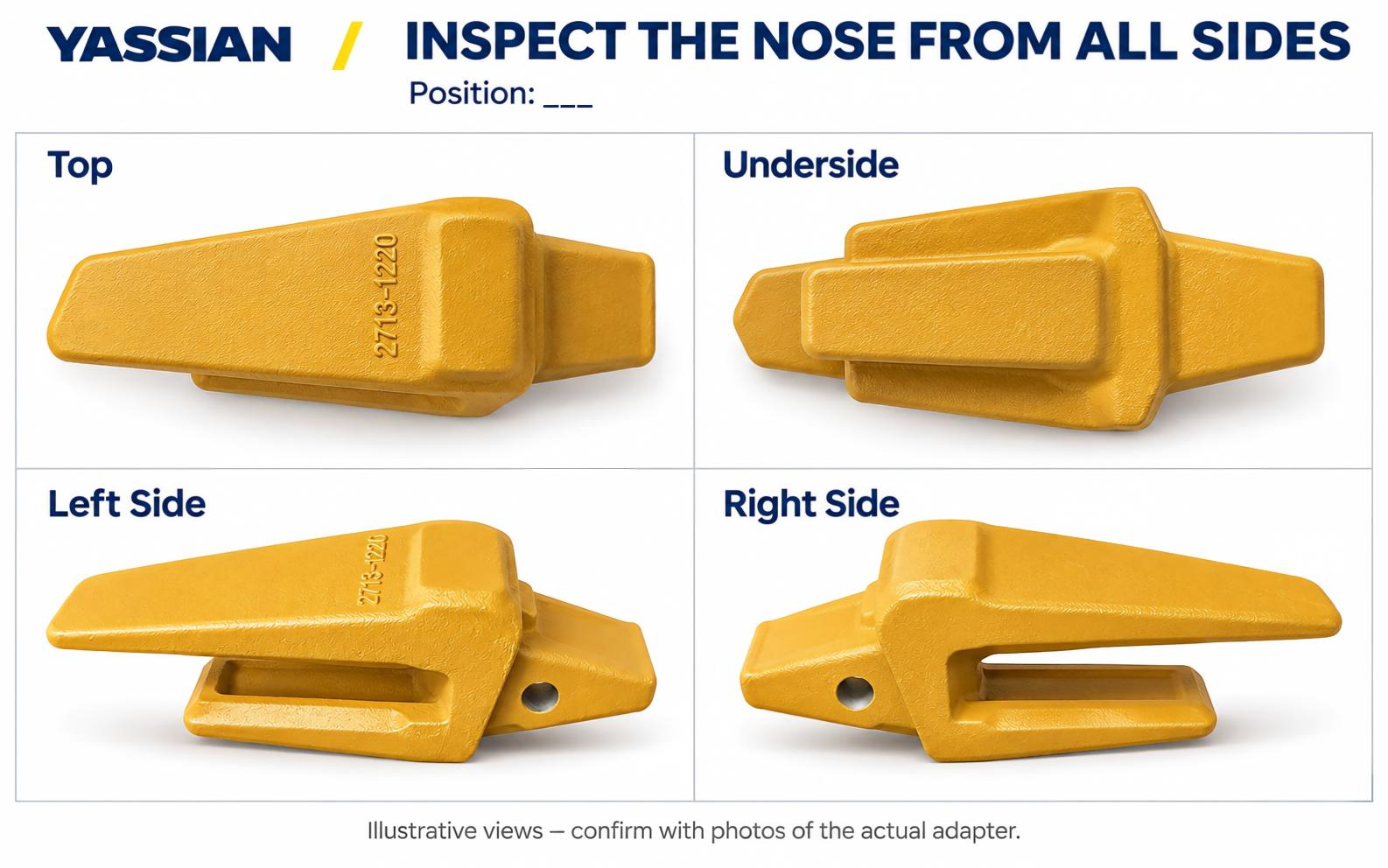
Examine the exposed nose from above, below and both sides. Record visible changes in profile, localised material loss, deformation and indications of cracking. Identify each observation on a photograph rather than assigning a cause from appearance alone.
Include the tooth pocket in the inspection. Record damage or unusual contact marks inside it where they can be observed. Keep observations from the tooth separate from those on the adapter.
Extend the review beyond the nose. Inspect accessible adapter straps, attachment areas and the adjacent bucket edge. Manufacturer maintenance guidance includes checks for damaged adapters and cracking around bucket-edge and weld areas; the exact rejection criteria depend on the assembly.
Compare positions to identify where closer examination is needed. An adjacent adapter is not automatically an acceptable reference: it may also be worn, previously repaired or a different component.
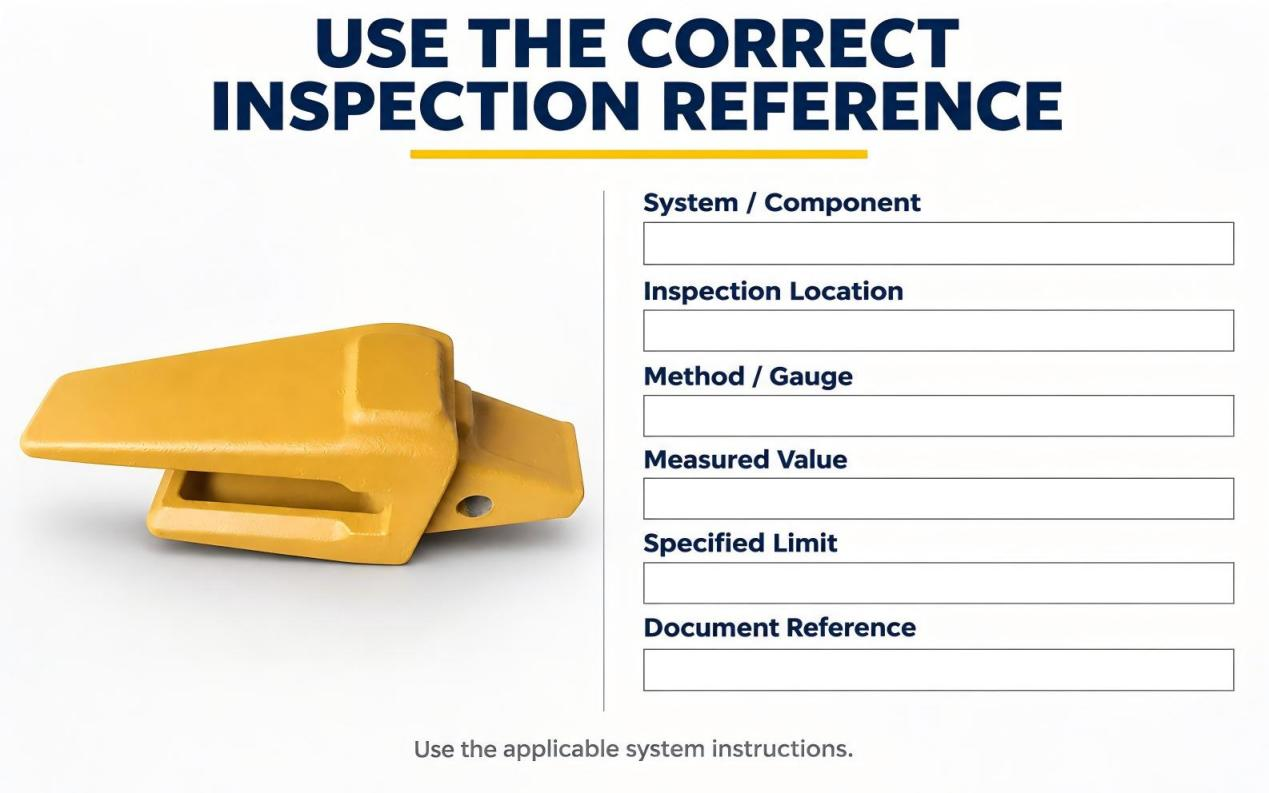
A photograph is useful for documenting condition, but it cannot establish an approved service limit. Obtain the inspection method for the identified system, including the relevant drawing, service instructions or specified gauge where one exists.
A gauge must match the component and inspection location. Manufacturers publish gauges for particular adapter profiles; that does not make one gauge suitable for every bucket tooth system.
When taking measurements, record the reference surfaces, section location, direction and units. State whether the reading comes from an unworn area, a worn contact surface or a repaired region. Keep the observed value separate from the permitted limit.
For more detail on preparing dimensional records, use our bucket tooth measurement guide. Measuring the tooth pocket supports identification, but it does not replace the adapter's own serviceability assessment.
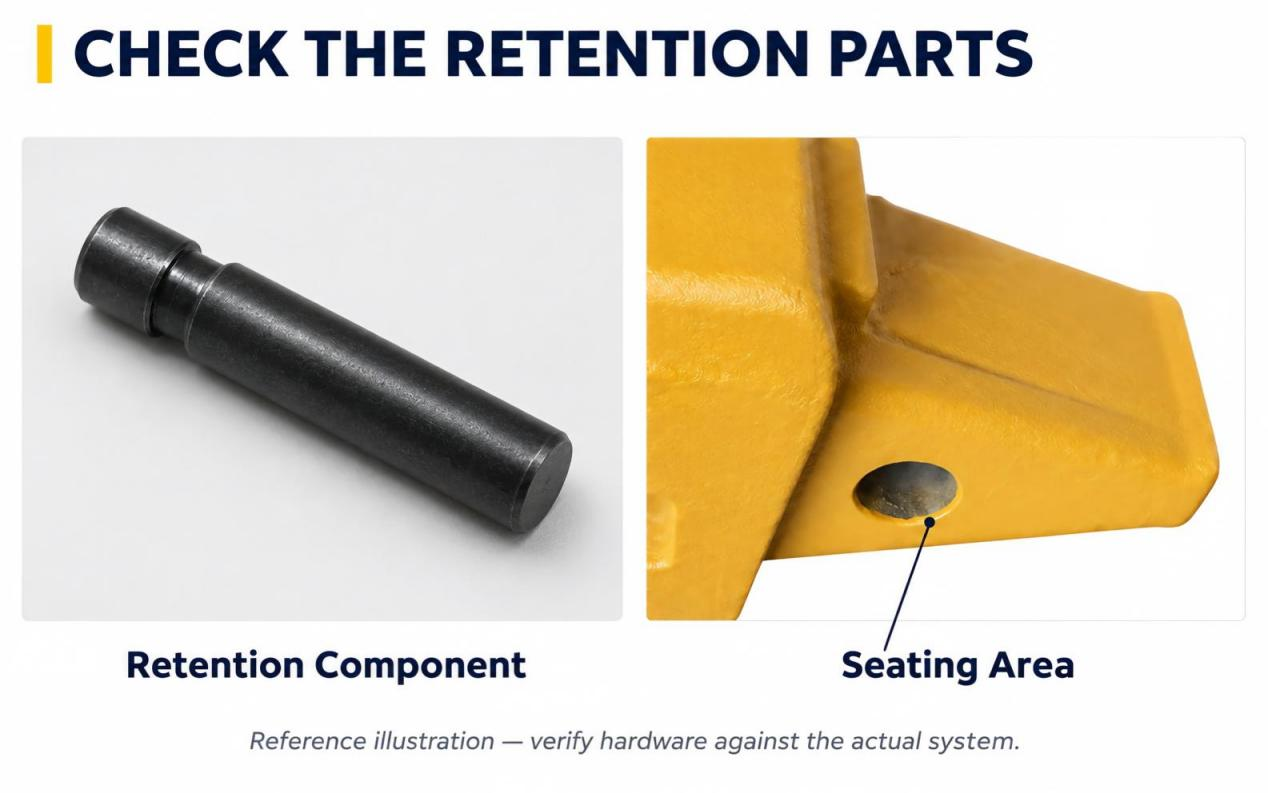
Inspect the applicable pins, retainers, locks and their seating areas. Record missing parts, damage and any evidence that components have moved from their intended position.
Use the manufacturer's requirements for replacement or reuse of locking components. Rules for one pin-and-retainer design should not be applied to another. Our bucket tooth retention guide can help organise system identification before consulting the relevant instructions.
Do not select a larger pin, add improvised packing or modify a pocket simply to remove noticeable movement. Such changes do not demonstrate that the nose meets its required profile.
If an authorised inspection includes checking a known matching tooth on the adapter, follow the prescribed method. Neither "no movement" nor a particular visible gap should become a homemade acceptance standard.
Use a short inspection sheet to connect findings with the next action:
Finding | Appropriate next step |
References do not establish a matching system | Resolve component identification before assembly |
Suspected cracking, deformation or attachment damage | Obtain the required technical assessment before returning the affected assembly to service |
Measured profile is outside the applicable limit | Follow the specified repair or replacement route |
Retention component fails its inspection criteria | Replace it as instructed and complete the remaining checks |
Checks meet the applicable requirements | Document acceptance and follow the installation procedure |
If no suitable service limit or reliable reference is available, record the uncertainty and refer the assembly for assessment. Do not label it acceptable solely because a replacement tooth can be fitted.
Any nose rebuilding or adapter welding needs an approved repair decision and the corresponding procedure. A generic build-up weld can alter the geometry being checked; it should not be treated as routine preparation for a new tooth.
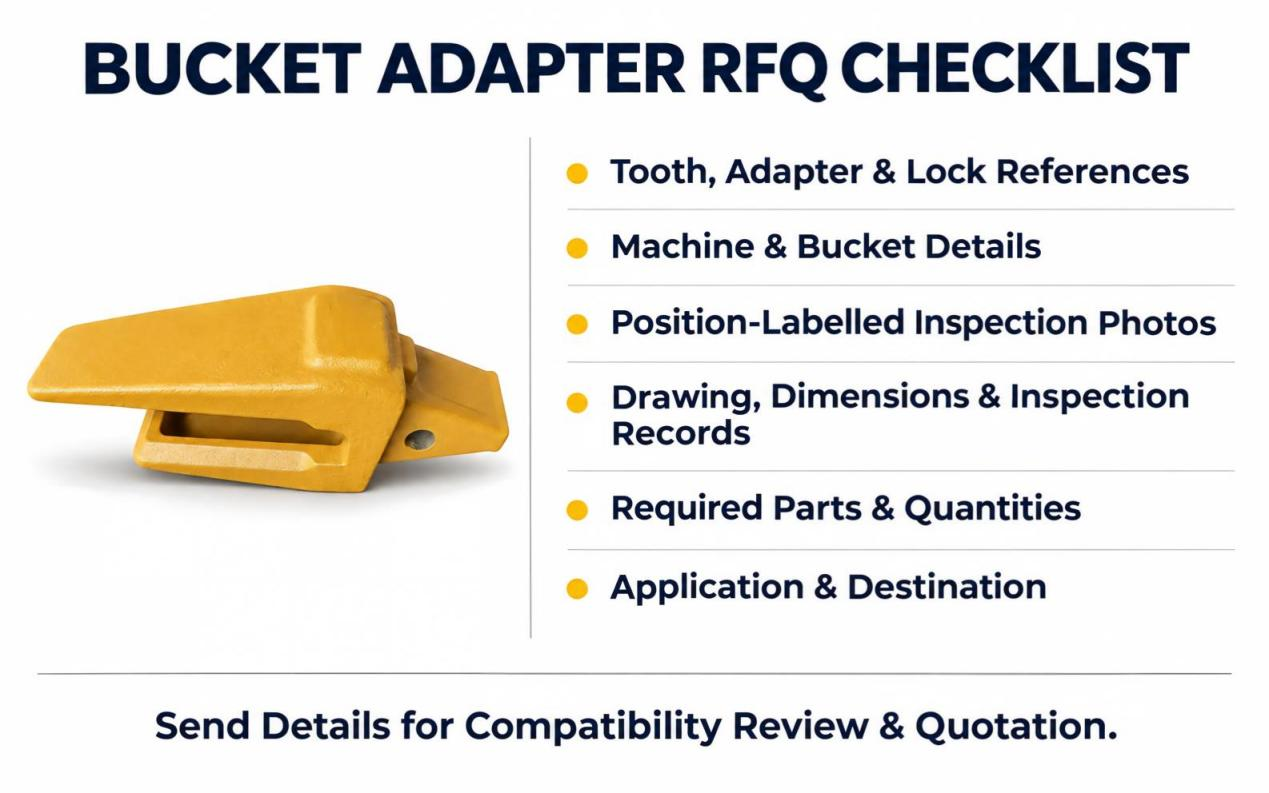
For an aftermarket replacement enquiry, send YASSIAN the tooth and adapter part numbers, retention details, machine and bucket identification, labelled photographs, drawing or key dimensions, quantity, working conditions and destination.
Include the inspection finding for each affected position and explain whether you need teeth, adapters, locking components or a separately itemised combination. Browse our bucket adapters, then contact YASSIAN for compatibility review and an RFQ.
Website: https://www.yassian.com/
Email: info@china-yasheng.com
WhatsApp: +86 180 6743 8979
This is general inspection guidance. Service limits, repair approval and installation requirements must come from the applicable documentation for the actual assembly.


