
- All
- Product Name
- Product Keyword
- Product Model
- Product Summary
- Product Description
- Multi Field Search

A worn tiger-long point on a Komatsu PC400-class bucket is a simple part to replace—until you search for "PC400TL" and find that no two quotations look the same. One supplier lists 208-70-14270TL, another 207-70-14152TL, a third 208-70-14152TL, and the pin details differ as well. The part you need is straightforward; the code you searched is not, and that gap is where wrong orders happen. This guide explains what "PC400TL" actually identifies, why the same name travels across several base numbers, and how to confirm—before you pay—that the tiger-long point you order will seat on the adapter already bolted to your bucket.
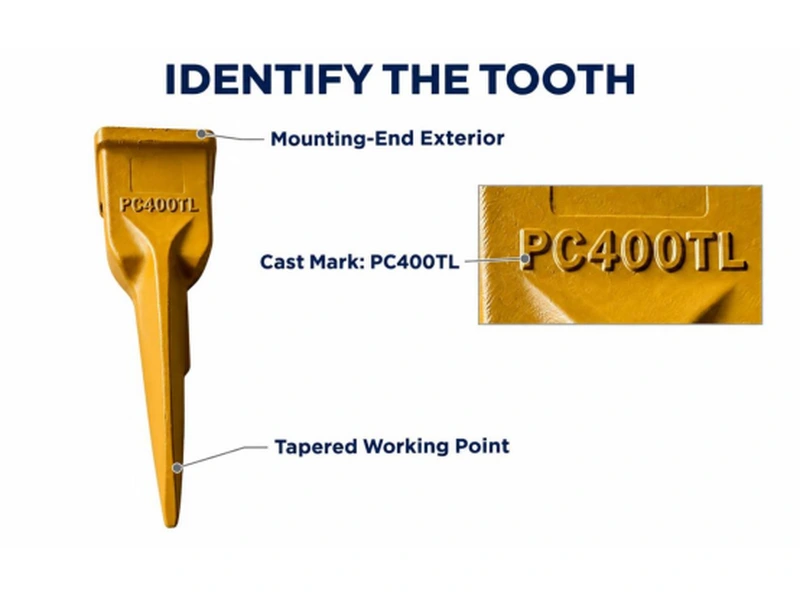
Break the code down. "PC400" points to the Komatsu PC400-class tooth system, and "TL" stands for Tiger Long—a penetration-first profile with a narrow, tapered working point. That is a description of a machine class and a tooth shape, not a unique stock-keeping unit.
The photograph of the YASSIAN PC400TL point shows what that description looks like in metal: a box-section mounting socket at the rear that seats over the adapter nose, a long tapered point, and a side retaining-pin hole visible on the upper side of the body. The number "PC400TL" is cast directly into the upper face. Those four features—socket, point, pin hole, and cast mark—are the ones worth comparing when you hold a replacement next to the part it will replace.
Because "PC400TL" describes a class and a profile, two teeth sold under that name by two suppliers can still differ in base number, pin arrangement, and pocket geometry. The label tells you the family. It does not tell you the item.
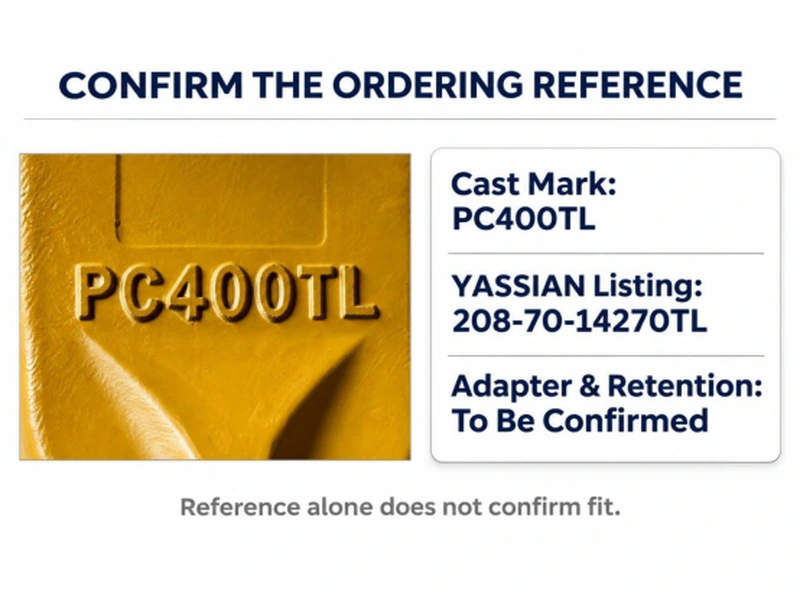
In the aftermarket, "PC400TL" is a short-code that gets attached to more than one base part number. YASSIAN's own PC400TL listing pairs it with 208-70-14270TL. Other catalogs pair the same "PC400TL" name with 207-70-14152TL or 208-70-14152TL, and some cite 208-70-K1340 or KM25SC. This is not one supplier being careless; it reflects how a popular name travels across regions and product lines. The 14152 family, for instance, is widely used for the PC400 standard chisel point, and "TL" is often bolted onto a base number to mark the tiger-long variant.
The practical consequence is simple: order by the base number and the retention, and ask the supplier to print the base number on the quotation. If you send only "PC400TL," you may receive a correct-family tooth that is not the exact item your bucket needs. If you send the base number plus your adapter and pin details, the supplier can confirm—or correct—you before production.
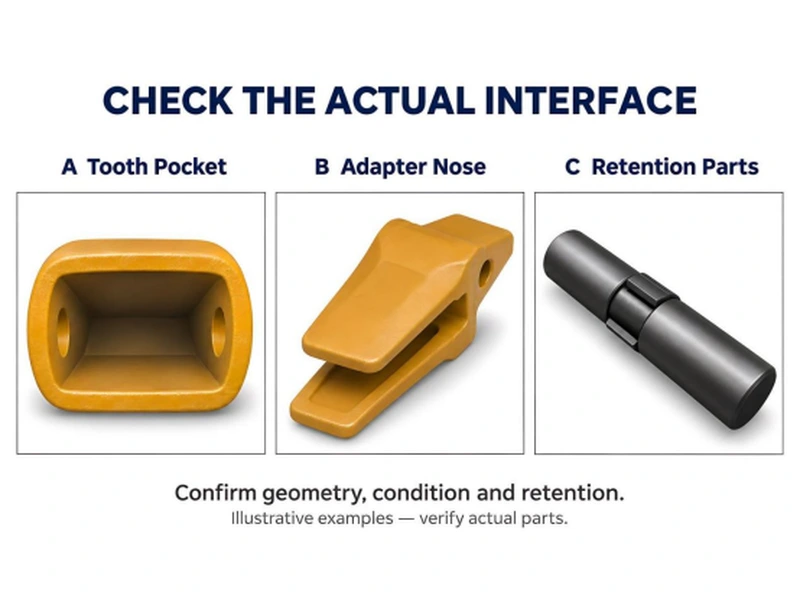
A PC400-style tooth does not attach to the bucket directly. It mounts over a weld-on adapter and is locked by a side pin, usually with a retainer. Catalogs commonly reference a side pin such as 09244-03036 and an adapter such as 208-939-3120 for this class—but treat those as starting points to verify on your own machine, never as a guarantee. Adapter part numbers change with bucket design, region, and production year.
Here is the point most buyers miss: on a shared tooth system, several profiles—standard chisel, rock chisel, and tiger long—can ride on the same adapter and pin set. That means switching a bucket to a TL point usually does not require a new adapter; it requires a point whose socket matches the adapter nose and whose pin hole lines up with the existing pin. Fit is decided at that interface, not by the word "PC400" on the box.
Two conditions quietly break that fit even when the number is right. First, a worn adapter: a nose that has lost material, or a pin hole that has ovalised, will not hold a new point correctly, however accurate its casting. Second, position: buckets often run different profiles at the corners and the centre, so confirm which positions actually take a TL point and how many each bucket carries.
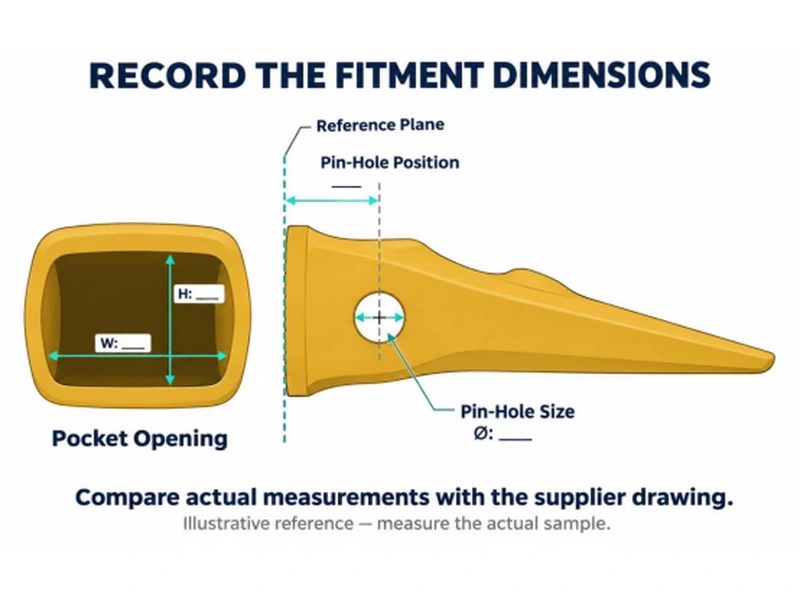
Read the numbers on the parts, not the invoice. Photograph the cast number on the old tooth, the number on the adapter nose, and any markings on the pin and retainer. Record every character, including suffixes.
Match the adapter nose and pin hole. Measure the adapter nose and the pin-hole size and position on your bucket, then compare them with the quoted item or a drawing. A measuring guide helps you take these readings the same way a supplier will read them—see YASSIAN's guide to measuring bucket teeth for pocket and pin-hole dimensions.
Confirm the pin and retainer. Ask which pin and retainer the quotation assumes, whether they are included, and whether your bucket uses the same retention style.
Confirm profile and count. State that the positions need the tiger-long profile, then give the number of teeth per bucket and their positions (corner versus centre).
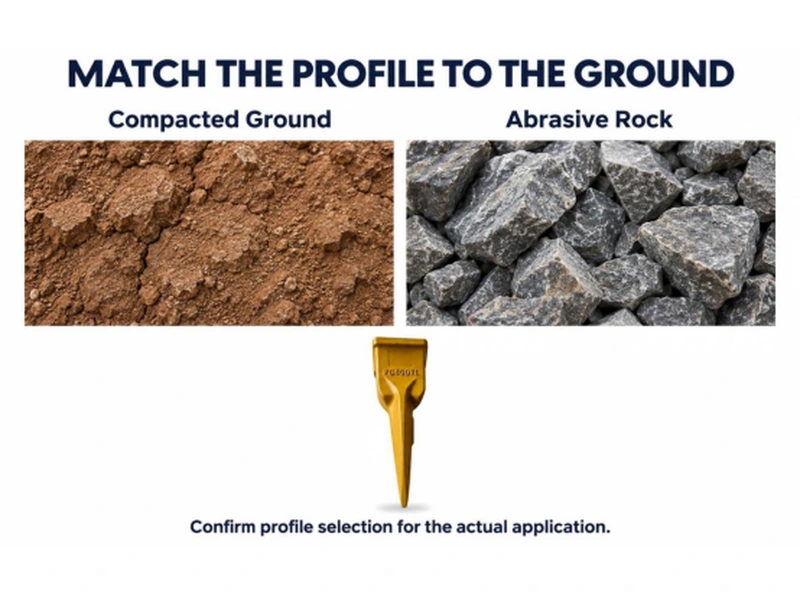
TL is a penetration profile: narrow, sharp, and quick into compacted soil, hardpan, frost, and tight material. The trade-off is wear mass—a slimmer point carries less material, so in highly abrasive rock it can wear out faster than a rock-chisel design. If your working face is hard, abrasive rock rather than tight or frozen ground, the profile choice deserves a second look before you lock the number. YASSIAN's comparison of rock chisel versus tiger bucket teeth covers that selection question in detail, so this guide stays focused on confirming the TL item once you have decided you want one.
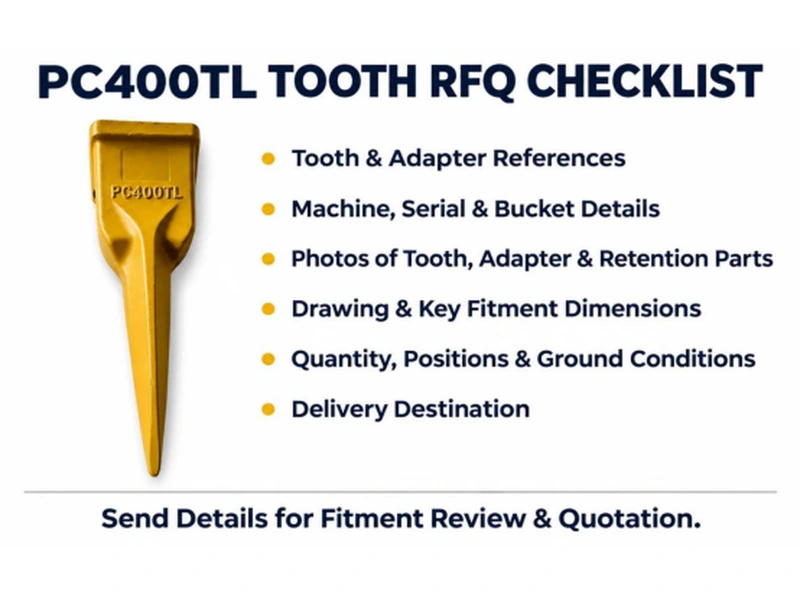
Send a short, complete package and most of the back-and-forth disappears:
Base or cast number of the tooth, plus the adapter number
Machine model and serial number, bucket type and capacity
Clear photos of the tooth, adapter nose, pin, and retainer
A drawing, or key dimensions: adapter nose and pin-hole size and position
Quantity, tooth positions, and the application or ground condition
Destination port or country
With those details in hand, a supplier can confirm the base number, pin generation, and profile against your bucket instead of guessing from a name. To request pricing on the YASSIAN PC400TL tiger-long point, or to have a replacement checked against your adapter, send your part markings, photos, and dimensions to the team. YASSIAN has supplied aftermarket ground engaging tools from Ningbo, China, since 2002.


