
- All
- Product Name
- Product Keyword
- Product Model
- Product Summary
- Product Description
- Multi Field Search


Choosing the right excavator track shoes is an important part of undercarriage maintenance and machine setup. Track shoes affect traction, flotation, ground pressure, maneuverability, and the load carried by other undercarriage components.
However, selecting track shoes is not simply a matter of choosing the widest shoe or finding one that looks similar to the original. The correct choice should match the machine model, track chain, grouser design, mounting dimensions, and actual working conditions.
This track shoe selection guide explains the main points to check before ordering replacement track shoes and helps equipment owners, distributors, and maintenance teams avoid common compatibility problems.
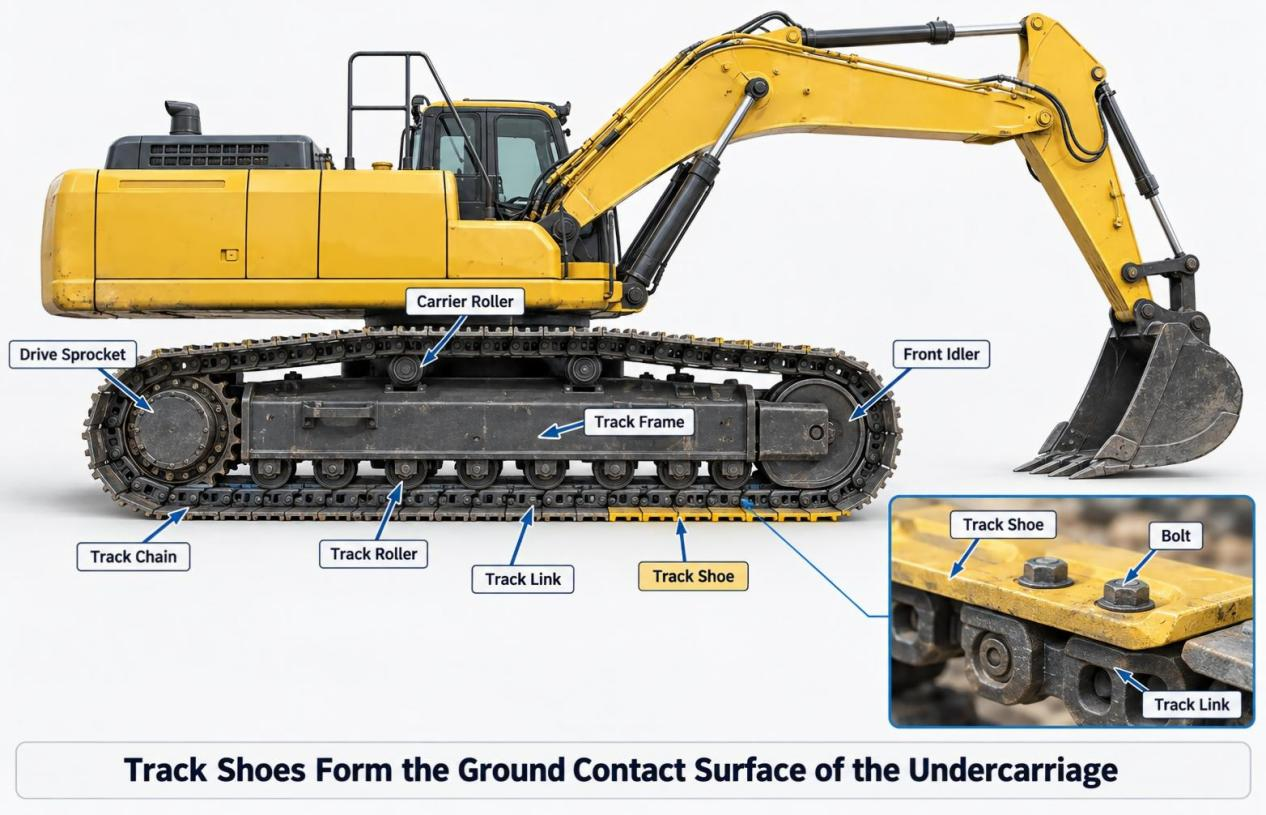
Track shoes are mounted to the track links and form the main contact surface between the machine and the ground.
Their main functions include:
Supporting machine weight
Providing traction
Distributing ground pressure
Helping the machine travel across different terrain
Protecting the track chain from direct ground contact
The shape and dimensions of a track shoe can affect how the complete undercarriage performs.
For this reason, excavator track shoes should always be considered as part of the complete system, together with the track chain, sprocket, idler, track rollers, carrier rollers, and track tension.
Before choosing a replacement track shoe, confirm the basic machine and undercarriage information.
Important information includes:
Machine manufacturer
Excavator model
Serial number, if available
Existing part number
Track chain type
Track pitch
Track shoe width
Grouser type
Bolt hole pattern
Two track shoes may look almost identical but still have different mounting dimensions.
For B2B buyers, providing the machine model, existing part number, dimensions, and clear photos can greatly reduce the risk of ordering an incorrect part.
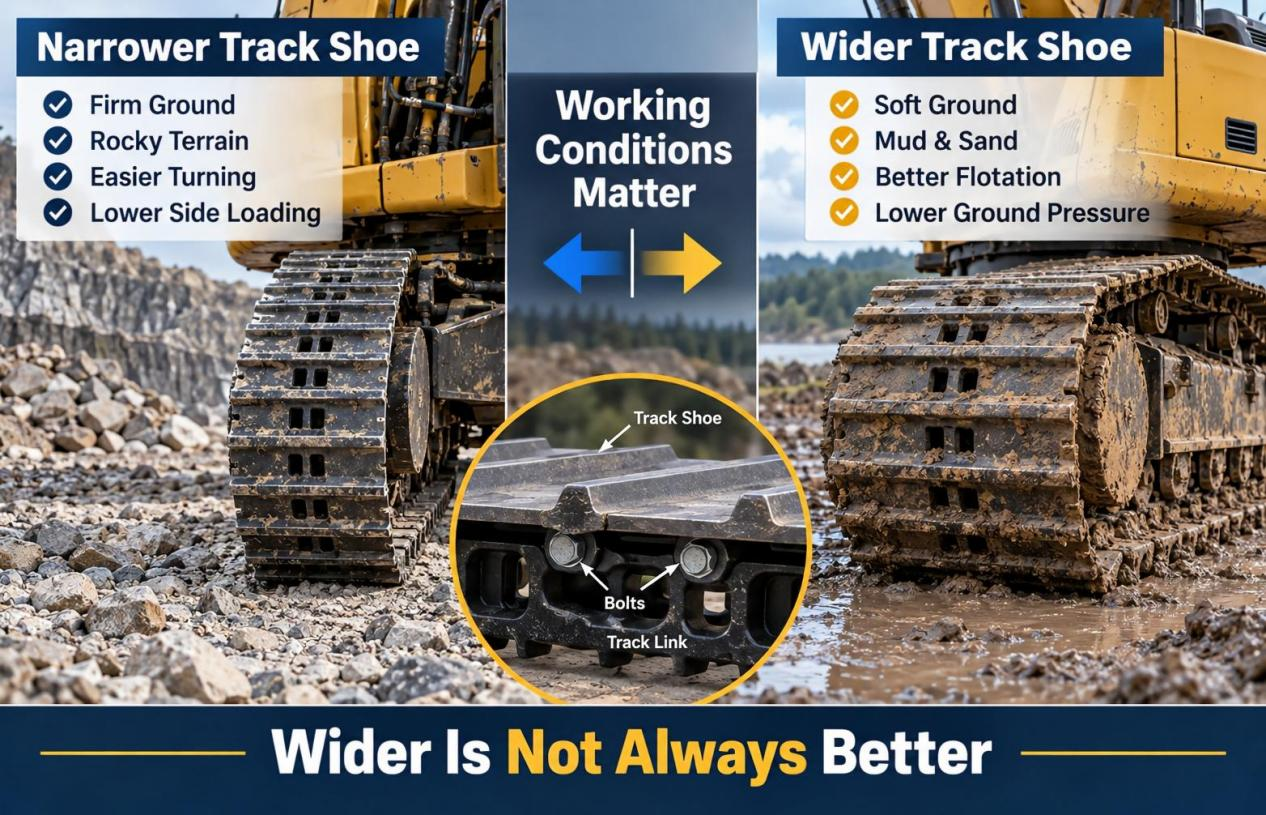
Track shoe width is one of the most important selection factors.
A wider shoe increases the ground contact area and usually reduces ground pressure. This can help the excavator operate on softer ground.
However, wider is not always better.
Narrower shoes are generally more suitable for firm or abrasive surfaces such as:
Rocky ground
Quarry applications
Hard construction sites
Compact soil
Potential advantages include:
Lower bending stress on the shoe
Easier turning
Reduced side loading
Better penetration on hard ground
Wider shoes can be useful in:
Mud
Sand
Soft soil
Wet ground
Low-bearing-capacity surfaces
Their larger ground contact area can improve flotation and reduce sinking.
However, excessively wide track shoes may increase resistance during turning and place additional stress on track links, pins, bushings, and other undercarriage components.
The best excavator track shoe width is therefore the width that provides sufficient flotation without creating unnecessary undercarriage load.
Grouser design also affects traction and maneuverability.
Single grouser shoes provide strong ground penetration and high traction.
They are commonly associated with applications where pushing force and traction are important.
Double grouser designs provide a balance between traction and maneuverability.
They may be used in applications where stronger grip is required without the aggressive penetration of a single grouser design.
Triple grouser track shoes are widely used on excavators because they usually provide smoother movement and better maneuverability.
They are commonly used in general construction and excavation applications.
The correct grouser type depends on the machine design and working conditions, so single, double, and triple grouser shoes should not be treated as universally interchangeable.
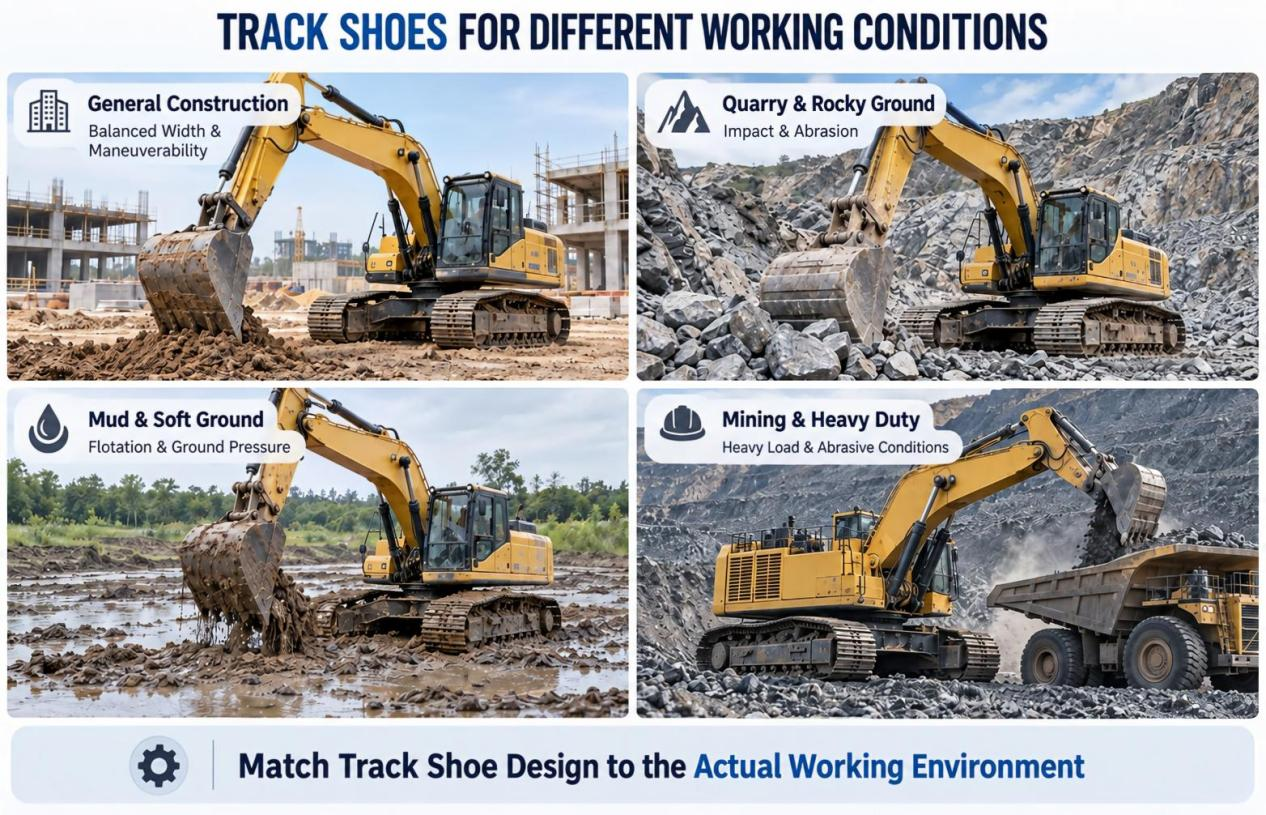
A good track shoe selection guide should always consider the operating environment.
For general construction, a balanced track shoe design is usually preferred.
The goal is to combine:
Reasonable traction
Good maneuverability
Stable ground contact
Controlled undercarriage wear
Rocky environments can expose track shoes to impact and abrasion.
Important considerations include:
Shoe width
Plate strength
Grouser wear
Bending resistance
Using a shoe that is unnecessarily wide may increase bending stress in difficult terrain.
Soft ground usually requires more flotation.
Wider shoes can help distribute machine weight over a larger area and reduce sinking.
Mining applications may involve high machine weight, abrasive material, impact loads, and long operating hours.
Track shoe selection should therefore consider both compatibility and the severity of the working conditions.
Visual similarity does not confirm compatibility.
Before ordering replacement track shoes, check important track shoe dimensions, including:
Overall shoe width
Grouser height
Plate thickness
Bolt hole diameter
Bolt hole spacing
Mounting pattern
Track pitch
A shoe with the same width may still have a different bolt pattern or track-chain interface.
This is why track shoe compatibility should never be confirmed from width alone.
The track shoe must match the mounting surface of the track link.
Key points include:
Number of bolt holes
Bolt hole diameter
Hole spacing
Bolt size
Mounting pattern
Track pitch
Incorrect hole spacing or mounting dimensions can prevent proper installation even when the track shoe appears to be the correct size.
For replacement orders, comparing the existing track shoe bolt pattern is one of the most useful ways to reduce identification errors.
A track shoe may physically fit the machine but still be unsuitable for the working environment.
Incorrect selection can contribute to:
Premature grouser wear
Bent shoe plates
Loose bolts
Enlarged bolt holes
Cracking
Uneven undercarriage wear
Increased pin and bushing stress
The condition of the complete undercarriage should also be checked when abnormal track shoe wear appears.
Problems with track tension, rollers, sprockets, or track links may influence how the shoes wear.
Several mistakes frequently cause problems during replacement.
More width does not automatically mean better performance.
The correct width should match ground conditions and machine requirements.
Two track shoes may look similar while having different mounting dimensions.
Bolt-hole configuration is a critical compatibility check.
The track shoe must match the correct track chain.
Different grouser designs are intended for different traction and maneuverability requirements.
Track shoe wear should not be evaluated separately from the chain, rollers, sprocket, idler, and track tension.
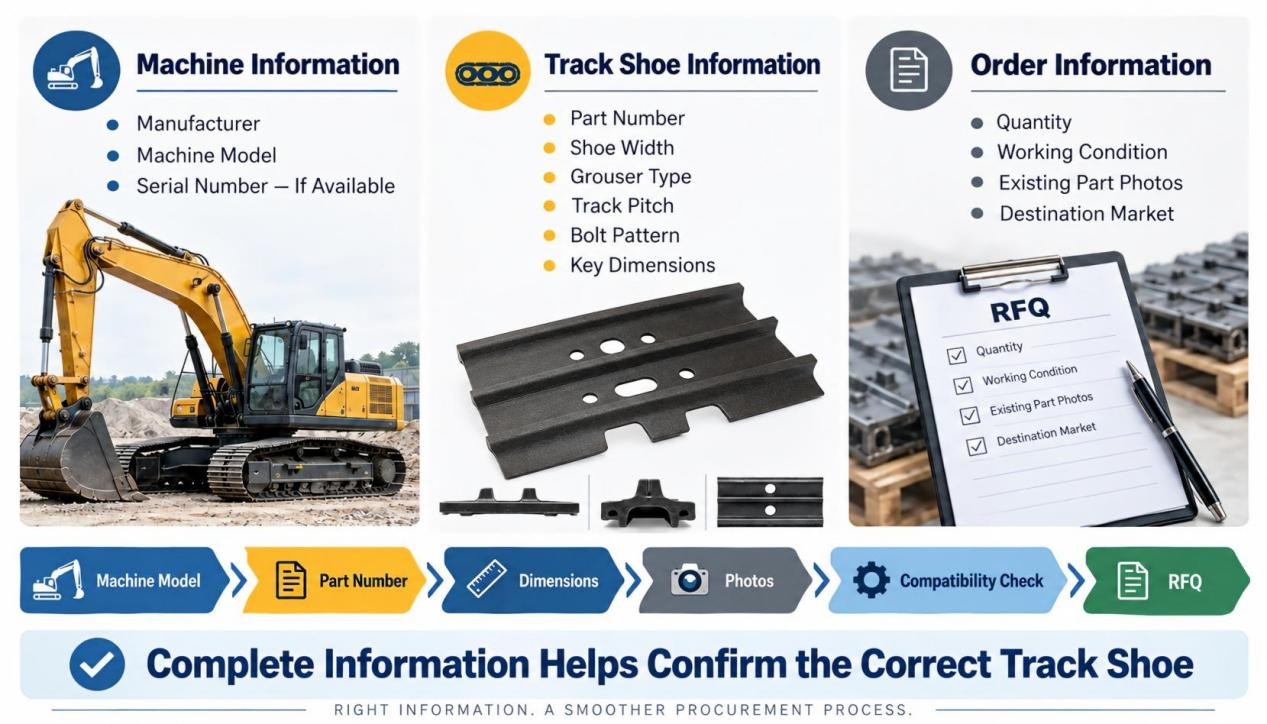
Distributors, importers, repair companies, and equipment owners can make track shoe identification easier by providing complete information.
A useful purchasing checklist includes:
Machine manufacturer
Machine model
Serial number, if available
Existing part number
Track shoe width
Grouser type
Track pitch
Bolt hole pattern
Key dimensions
Existing part photos
Required quantity
Working conditions
The more complete the information, the easier it is to confirm the correct replacement configuration.
Choosing the right excavator track shoes requires more than matching appearance or width.
A reliable selection process should consider:
Machine Model + Track Chain + Track Shoe Width + Grouser Type + Bolt Pattern + Working Conditions
Correct identification can help reduce installation problems, premature wear, and unnecessary undercarriage stress.
For buyers who are not sure which replacement track shoe is required, the most useful information to prepare is the part number, machine model, existing track shoe dimensions, bolt pattern, and clear product photos.
This makes it easier to confirm track shoe compatibility before ordering and helps ensure that the selected track shoes match both the machine and the actual application.
Before ordering, confirm:
Check | What to Confirm |
Machine | Manufacturer and model |
Part Number | Existing reference if available |
Track Chain | Pitch and mounting configuration |
Shoe Width | Suitable for ground conditions |
Grouser Type | Single, double, or triple |
Bolt Pattern | Hole number, diameter, and spacing |
Dimensions | Width, thickness, grouser height |
Application | Construction, quarry, mining, soft ground |
Condition | Existing shoe and undercarriage wear |


