
- All
- Product Name
- Product Keyword
- Product Model
- Product Summary
- Product Description
- Multi Field Search
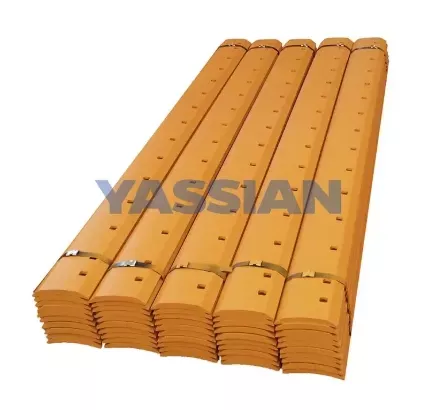
In the ground engaging tools (GET) industry, selecting the right flat cutting edge is not just a matter of fit—it directly impacts machine productivity, wear life, and operating cost per hour. Whether you are working in mining or construction, understanding the differences in application requirements is essential for making the right choice.
This guide explains the key differences between mining and construction applications, and how to select the most suitable flat cutting edge for your equipment.
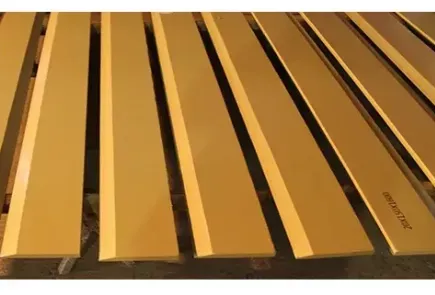
Excavator Cutting Edges Single Bevel Flat Blades
A flat cutting edge is a straight, continuous wear part installed on buckets, blades, or moldboards of heavy equipment such as:
Excavators
Bulldozers
Motor graders
Wheel loaders
It is typically made from high-carbon or through-hardened alloy steel, offering a balance of strength, wear resistance, and cost efficiency.
Flat cutting edges are widely used because they provide:
Predictable cutting performance
Strong impact resistance
Even wear distribution
Cost-effective replacement cycles
Although the same type of flat cutting edge may be used in both industries, the working conditions are dramatically different.
Construction Applications
Relatively controlled and uniform terrain
Common materials: soil, sand, gravel, asphalt
Focus on precision grading and leveling
Flat cutting edges are widely used in construction because they deliver stable and consistent cutting results for roadwork and site preparation .
Mining Applications
Extremely harsh and uneven terrain
Materials: hard rock, ore, slag, high-abrasion minerals
Frequent exposure to impact + abrasion
Mining environments place significantly higher demands on GET components, requiring enhanced durability and protection systems.

7J2972 Cat Bulldozer Dozer Cutting Edge
Factor | Construction | Mining |
Cutting Accuracy | High | Medium |
Impact Resistance | Moderate | Very High |
Abrasion Resistance | Medium | Extremely High |
Wear Pattern | Uniform | Irregular / Severe |
Flat cutting edges are ideal for leveling and finishing tasks, but in mining, they may need reinforcement or alternative designs due to extreme conditions.
In construction:
Wear is more even and predictable
Lower replacement frequency
Focus on cost-effective solutions
In mining:
Wear is faster and uneven
High downtime cost if failure occurs
Requires long-life materials and thicker edges
Modern GET solutions (such as through-hardened steel edges) can deliver longer wear life and lower cost per hour, even in demanding environments.

6 Holes Grader Blade Cutting Edge 1406836
Flat cutting edges come in several configurations:
Double bevel (reversible) – extend service life
Single bevel (weld-on) – precise grading
Bolt-on flat edges – easy installation and maintenance
For construction, standard flat edges are often sufficient.
For mining, operators may require:
Thicker edges
Reinforced wear zones
Tungsten carbide overlays for extreme abrasion
Road construction and maintenance
Site leveling and grading
Foundation preparation
Flat edges are considered the go-to option for roadwork due to their strength and consistent performance.
Bulk material handling
Loading operations (non-extreme rock)
Secondary grading tasks
However, in high-impact or highly abrasive mining conditions, flat edges may need to be upgraded or combined with:
Serrated edges (for penetration)
Curved edges (for material flow)

1 1/4 X 12 X 12 inch Single Bevel Flat Excavator Edge
Construction → Standard flat cutting edge
Mining → Reinforced or customized flat edge
Through-hardened steel → High impact resistance
High-carbon steel → Cost-effective for lighter work
Carbide-enhanced edges → Extreme abrasion environments
Thicker edges = longer wear life
Wider edges = more wear material (lower cost per hour over time)

1 1/4 X 12 X 12 inch Single Bevel Flat Cutting Edge
Bolt-on → Faster replacement, less downtime
Weld-on → Better for precision but harder to replace
The cheapest edge is not always the most economical. A high-quality flat cutting edge can:
Reduce downtime
Improve fuel efficiency
Extend equipment lifespan
GET selection directly affects productivity and operating cost, making it a critical decision for fleet managers.
For reliable performance across both construction and mining applications, consider high-quality bucket cutting edges.
These solutions typically offer:
OEM-compatible designs (CAT, Komatsu, etc.)
High-strength alloy steel construction
Multiple configurations (bolt-on, reversible, custom sizes)
Stable supply for bulk orders
Choosing the right flat cutting edge depends heavily on your application:
Construction → prioritize precision, cost efficiency, and uniform wear
Mining → focus on durability, impact resistance, and wear life
By aligning your cutting edge selection with real working conditions, you can significantly improve equipment performance, reduce downtime, and lower total operating costs.
Looking for a reliable flat cutting edge manufacturer or supplier?
Explore customized solutions, bulk pricing, and OEM-compatible designs here:
https://www.yassian.com/bucket-cutting-edge.html
Or contact our team today to get a tailored recommendation based on your working conditions and equipment model.


