
- All
- Product Name
- Product Keyword
- Product Model
- Product Summary
- Product Description
- Multi Field Search

Choosing the right excavator fuel filter is essential for protecting the diesel fuel system and keeping the machine running reliably. Although fuel filters may look simple, differences in part number, dimensions, thread size, sealing design, and filtration structure can determine whether a replacement filter is actually suitable.
For equipment owners, distributors, importers, and maintenance teams, selecting the correct replacement fuel filter should involve more than comparing appearance or price.
This guide explains the most important factors to check before ordering an excavator fuel filter.
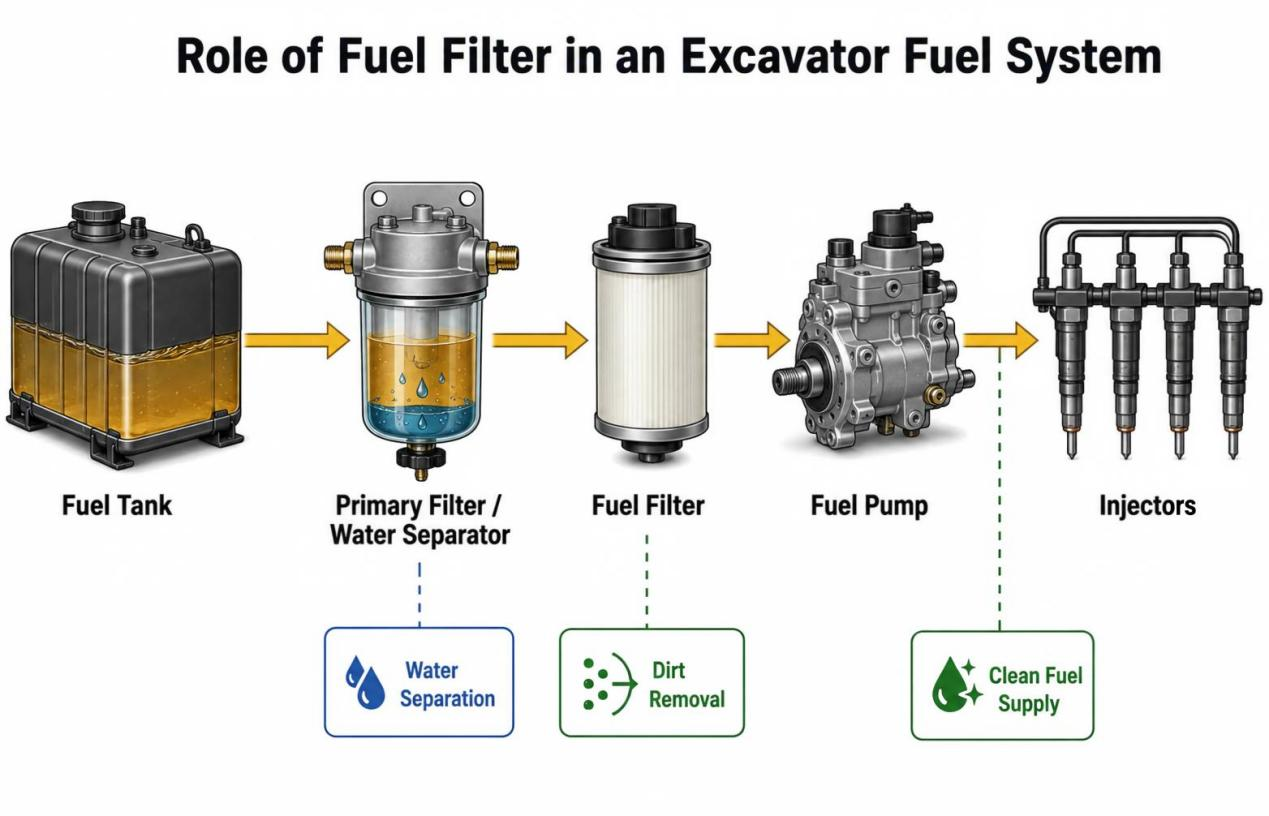
An excavator fuel filter removes dirt, rust, dust, and other contaminants from diesel fuel before they reach sensitive fuel-system components.
Clean fuel helps protect:
Fuel pumps
Injectors
Fuel lines
Common-rail components
Other precision fuel-system parts
Construction machinery often works in dusty, muddy, or remote environments, making fuel contamination a common maintenance concern.
Some machines also use a fuel water separator to remove water from diesel before it enters the main fuel system.
What to Check | Why It Matters |
Part number | Confirms the intended replacement |
Excavator & engine model | Different configurations may use different filters |
Filter type | Ensures the replacement matches the original system |
Dimensions & thread | Prevents installation problems |
Filtration specification | Ensures suitable fuel-system protection |
Water separation | Required for systems using water separators |
Quality & supplier consistency | Important for long-term and bulk purchasing |
Working Environment | Helps determine contamination and filtration requirements |
The first step is to identify the original filter number.
Useful information includes:
OEM part number
Existing filter number
Cross-reference number
Excavator model
Engine model
Do not choose a fuel filter only because it looks similar.
Two filters may have nearly identical external dimensions but use different threads, gaskets, filtration media, or internal structures.
For B2B purchasing, confirming the correct part number is one of the easiest ways to avoid ordering mistakes.
The excavator model alone may not always be enough.
Machines in the same series can sometimes use different engines depending on production year, market, or configuration.
When requesting an excavator fuel filter, provide:
Excavator brand
Machine model
Engine manufacturer
Engine model
Serial number when required
Providing both machine and engine information allows the supplier to check compatibility more accurately.

YASSIAN provides several different fuel-filter types.
A spin-on filter is replaced as a complete unit and is widely used on construction machinery.
A fuel filter element is installed inside a reusable housing. The element dimensions and sealing position must match correctly.
A fuel water separator is designed to separate water from diesel while also filtering contaminants.
Some excavators use separate primary and secondary filters, while others use combined filtration systems.
Before ordering, confirm the exact filter type required by the machine.
Correct dimensions are critical when selecting a replacement fuel filter.
Depending on the design, check:
Overall height
Outer diameter
Thread size
Thread type
Gasket inner diameter
Gasket outer diameter
Mounting interface
Seal position
For cartridge filters, also verify the element height, diameter, center opening, and sealing structure.
If the part number is unclear, clear photos, measurements, or the original sample can help identify the correct filter.
A good diesel fuel filter must remove contaminants while still allowing sufficient fuel flow.
Important factors may include:
Filtration efficiency
Filter media quality
Contaminant-holding capacity
Fuel flow
Pressure drop
A finer filter is not automatically better.
The correct filtration specification should match the requirements of the original fuel system rather than relying on a generic micron rating.
Water in diesel fuel can contribute to corrosion, injector problems, unstable fuel delivery, and premature wear.
Excavators operating at mines, remote construction sites, or areas where fuel is stored on-site may face greater contamination risks.
If the machine originally uses a fuel water separator filter, make sure the replacement provides the correct water-separation function and compatible mounting structure.
When comparing an aftermarket or heavy equipment fuel filter, pay attention to manufacturing quality.
Important areas include:
The media should be evenly formed and securely assembled.
Sealing components should fit correctly and be suitable for diesel fuel.
The filter housing should be clean, structurally sound, and properly formed.
Thread dimensions should be accurate to ensure correct installation.
Internal parts, end caps, seals, and bonding should be consistent.
For distributors and importers purchasing large quantities, stable batch quality is especially important.
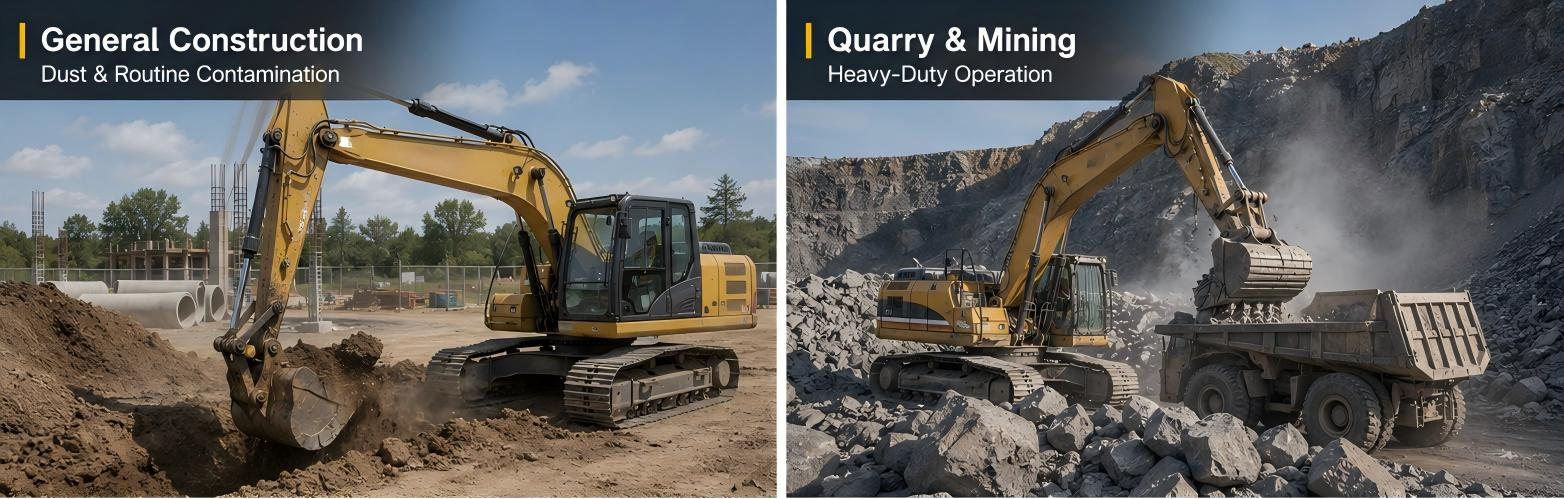
Fuel-filter maintenance should reflect the actual working conditions.
Dust and regular machine operation may increase contamination.
Long operating hours and harsh conditions may require closer inspection.
Fuel quality and storage conditions may vary.
Water contamination can become a greater concern.
A construction equipment fuel filter should therefore be selected and maintained according to the real application.
Yes. OEM filters usually provide clear equipment reference information, while aftermarket filters may offer wider sourcing options and competitive procurement costs.
However, aftermarket quality can vary.
Before choosing a supplier, compare:
Part-number accuracy
Dimensions
Filter media
Sealing design
Manufacturing consistency
Packaging
Batch identification
Quality-control process
Price should not be the only consideration.
To help suppliers identify the correct excavator fuel filter, provide as much information as possible:
Part number
Excavator brand and model
Engine model
Required quantity
Photos of the existing filter
Filter dimensions if available
Destination market
This information helps reduce compatibility mistakes and speeds up quotation and confirmation.
Avoid these common mistakes:
Choosing only by appearance
Ignoring the engine model
Using an unverified cross-reference
Ignoring thread or gasket dimensions
Confusing a fuel filter with a water separator
Choosing only by price
A similar-looking filter is not necessarily a correct replacement.
There is no single replacement interval for every excavator.
Replacement frequency depends on:
Manufacturer recommendations
Operating hours
Fuel quality
Working conditions
Maintenance history
Filter condition
Possible signs of a restricted fuel filter may include difficult starting, reduced engine performance, irregular fuel delivery, or visible contamination.
However, these symptoms can also have other causes, so inspection should be carried out before replacing parts.
Before ordering, confirm:
✅️ Part number
✅️ Machine model
✅️ Engine model
✅️ Filter type
✅️ Dimensions
✅️ Thread size
✅️ Gasket size
✅️ Filtration requirements
✅️ Water-separation requirements
✅️ Supplier quality control
Choosing the correct excavator fuel filter requires more than matching the shape of the original filter.
Part number, machine compatibility, engine model, dimensions, filtration structure, water-separation requirements, and manufacturing quality should all be checked before purchase.
For distributors, importers, contractors, and equipment owners, accurate filter selection can reduce compatibility problems and make maintenance more efficient.
When sourcing a replacement fuel filter, providing the part number, machine model, engine model, photos, and dimensions will help confirm the correct option faster and more accurately.


