
- All
- Product Name
- Product Keyword
- Product Model
- Product Summary
- Product Description
- Multi Field Search

Choosing replacement bucket teeth requires checking the part number, mounting dimensions, bucket configuration, and working conditions. A similar-looking tooth may not fit your existing bucket.
When sourcing 1U1857 bucket teeth, verify the original part reference and installation requirements before ordering. This helps distributors, contractors, and maintenance teams reduce fitment issues and avoid unnecessary returns.
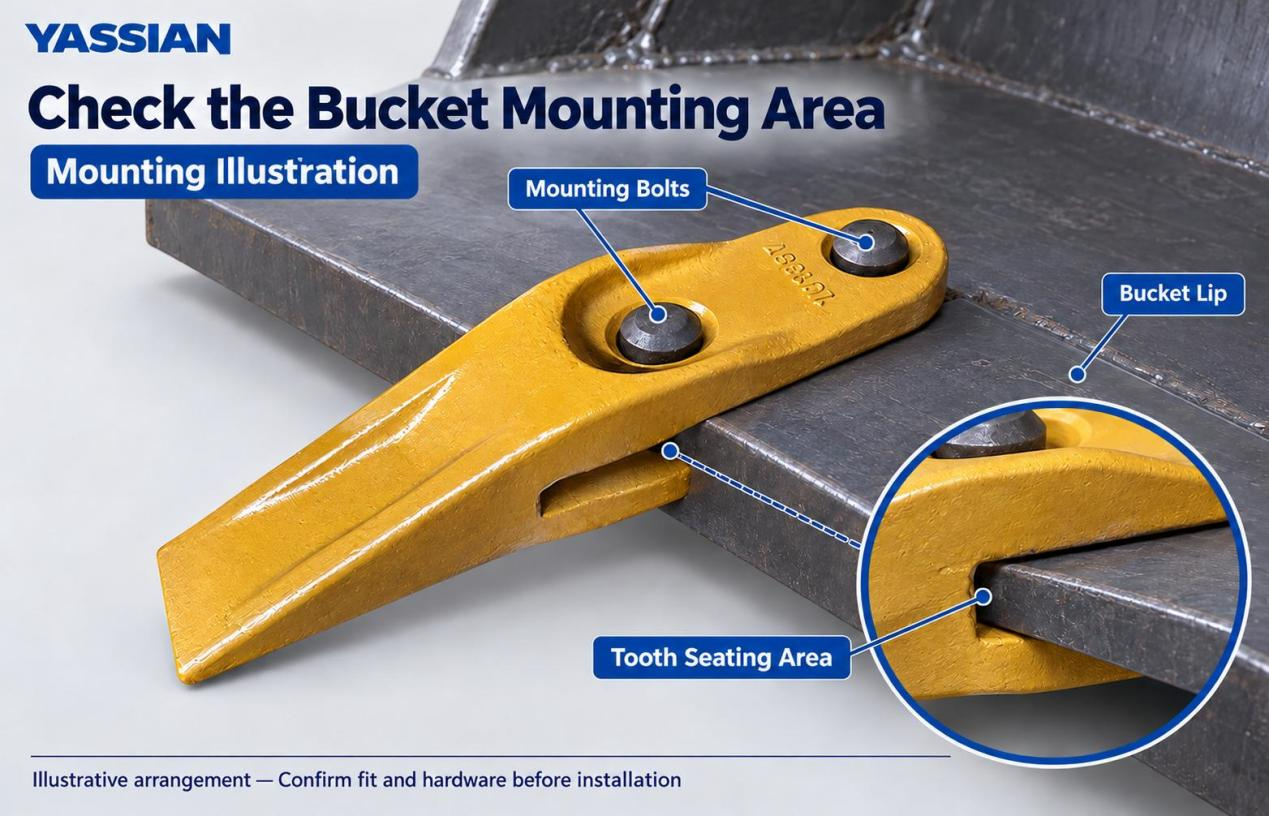
Caterpillar identifies 1U-1857 as a Bolt-On Uni-Tooth Bucket Tip. The referenced design is a one-piece tooth that bolts directly onto the bucket without a separate adapter. Published applications include certain small and medium wheel loader buckets.
This distinction matters when ordering. A 1U1857 unitooth should be evaluated against its mounting arrangement, rather than treated as a pin-on tip for an existing adapter. Aftermarket bucket teeth sold against this reference should have their dimensions and supply scope confirmed before purchase.

Begin with any readable markings on the old tooth. Record the complete part number, including additional letters or suffixes, and compare it with previous purchase records or the relevant parts catalog. A casting mark alone may not identify the service part.
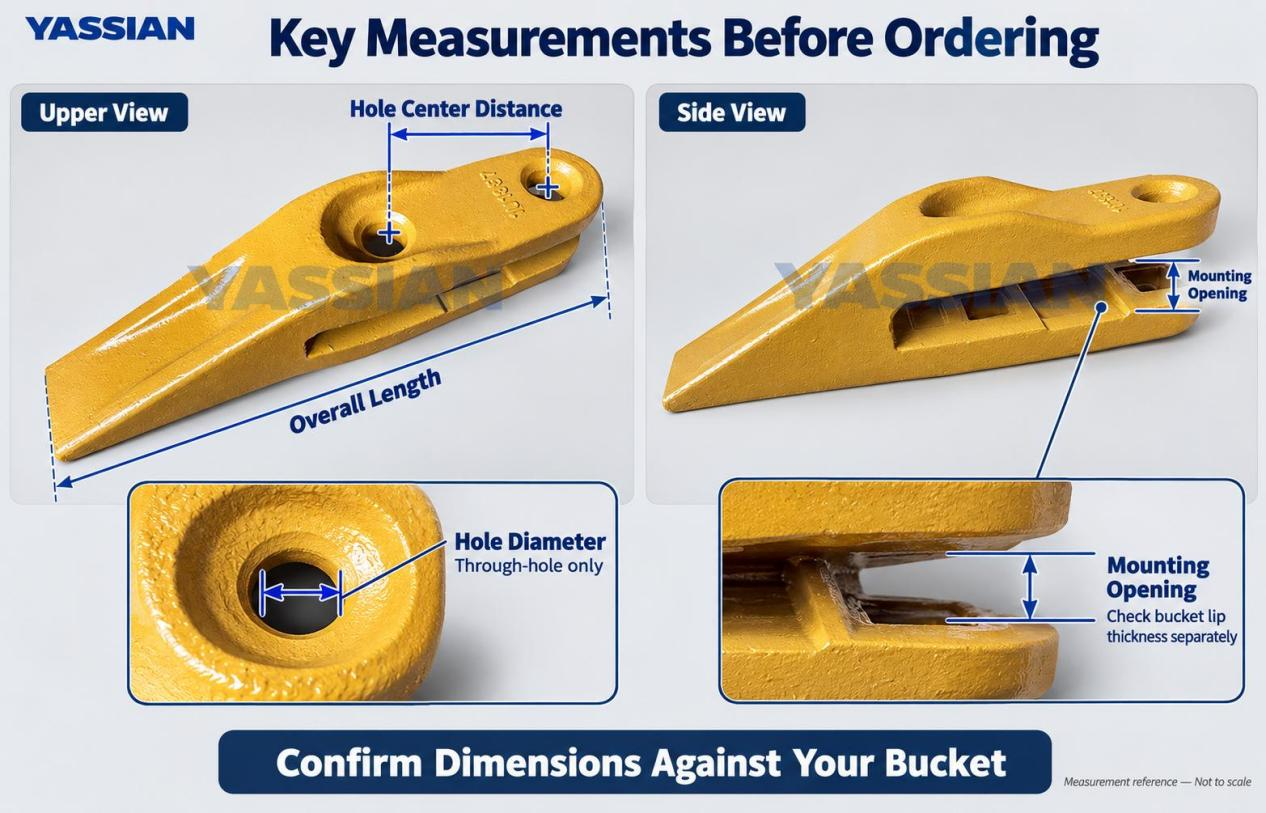
Photograph the tooth from above, below and from the side. Include close-ups of the mounting holes and a wider image showing its installed position on the bucket.
If the number is unreadable, send these photographs with measured dimensions. Explain which surfaces are worn or damaged: measurements taken from a heavily worn tooth may no longer represent its original shape.
Machine information helps narrow the search. Caterpillar's published compatibility list for 1U-1857 includes examples such as the 928G and 938G wheel loaders and IT28F integrated toolcarrier. However, these references do not confirm fit for every bucket fitted to those machines.
A loader may have a replacement bucket, modified cutting edge or repaired mounting area. Record the machine serial number and bucket identification where available, then compare the actual installation with the proposed replacement.
Check | What to confirm |
Mounting holes | Hole count, diameter, shape and center-to-center spacing |
Bucket lip thickness | Thickness at the mounting location and compatibility with the tooth |
Contact surfaces | Matching seating geometry without interference |
Overall dimensions | Length, width and height using agreed measurement points |
Fasteners | Bolt and nut specifications required for the installation |
Use the same measurement units and reference points when comparing drawings. For example, hole spacing should clearly indicate whether it is measured between hole centers.
For loader bucket teeth replacement, ask the supplier to resolve discrepancies before dispatch. Similar overall length does not establish that the mounting interface will fit.
Compatibility is only part of selection. The tooth must also suit the work performed by the bucket.
Describe the material being handled, whether the task involves loading loose material or digging into compacted ground, and whether abrasion or repeated impact is the main concern. Caterpillar describes this Uni-Tooth for general applications where breakage is not a concern; it should not automatically be specified for severe impact work.
Share photographs of previous wear or damage. These help frame a useful application discussion without assuming that every failure has the same cause.
For repeat or bulk orders, evaluate more than the unit price. Request clear product photographs, dimensional drawings or inspection records, and confirmation of exactly what the quotation includes.
Buyers should also clarify:
Material and heat-treatment documentation available for the product
Critical dimensions and batch inspection requirements
Sample approval procedures
Hardware, packaging, and labeling
Delivery terms and destination costs
Hardness claims alone do not establish fitment or service life. Comparing quotations against the same technical and supply requirements makes supplier evaluation more meaningful.
They are common formats of the same reference. Check any additional supplier suffixes separately, as they may identify a particular variant.
Provide the model, but also verify the bucket configuration, existing part number and mounting dimensions before confirming the order.
The referenced design is a one-piece bolt-on tooth that does not require a separate adapter. Confirm that the quoted replacement follows this arrangement.
Supply scope varies. Ask for the quotation to state hardware part references or specifications and quantities explicitly.
Send photographs of the tooth and bucket mounting area, key measurements, machine details and any available bucket identification.

YASSIAN is a China-based factory supplier of construction machinery wear parts serving overseas distributors, importers, contractors and maintenance businesses.
For your next 1U1857 bucket teeth order, send us the part reference, machine and bucket details, mounting measurements, product photographs and required quantity. Include your working conditions, destination and whether you need fasteners.
Visit YASSIAN to discuss replacement requirements and request a quotation. Providing this information at the start helps establish a clear basis for compatibility review and supply.


