
- All
- Product Name
- Product Keyword
- Product Model
- Product Summary
- Product Description
- Multi Field Search

A bulldozer sprocket should be replaced when its teeth show excessive wear, causing poor engagement with the track chain, reduced traction, abnormal noise, or accelerated wear of other undercarriage components.
In heavy construction, mining, and earthmoving applications, bulldozers operate under extreme conditions where undercarriage parts are constantly exposed to impact, pressure, and abrasion. As a key bulldozer undercarriage component, the bulldozer sprocket transfers power from the final drive system to the track chain and directly affects machine performance and operating efficiency.
Over time, sprocket teeth wear down and reduce the accuracy of engagement with the track chain. A worn dozer sprocket can increase maintenance costs, shorten component lifespan, and cause unexpected downtime. Therefore, regular inspection and timely replacement are essential for equipment owners and maintenance teams to keep bulldozers operating reliably.
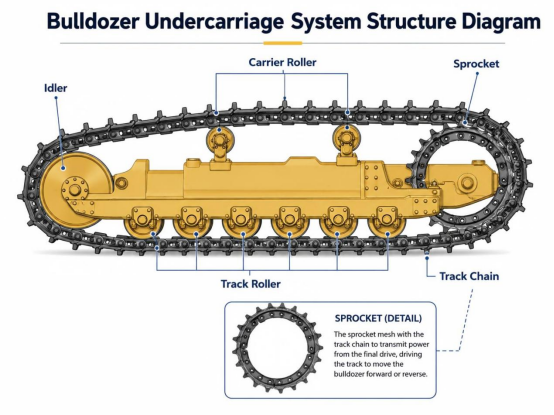
A bulldozer sprocket the final drive power to the track chain. Its teeth engage with the track links and drive the crawler system, allowing the bulldozer to move forward, reverse, and perform heavy pushing operations.
The main functions of a dozer sprocket include:
The sprocket transfers engine power through the final drive system to the track chain. A properly functioning sprocket ensures smooth movement and efficient power delivery.
The sprocket controls the movement of the track chain. A worn sprocket may cause improper engagement, resulting in vibration, noise, and unstable operation.
For bulldozers working in challenging environments such as mines, quarries, and construction sites, a high-quality sprocket helps maintain strong traction and pushing capability.
Because the sprocket works together with track chains, rollers, and idlers, its condition has a direct impact on the entire bulldozer undercarriage system.
Identifying sprocket wear early helps equipment owners reduce repair costs, prevent unexpected downtime, and extend the service life of the bulldozer undercarriage system.
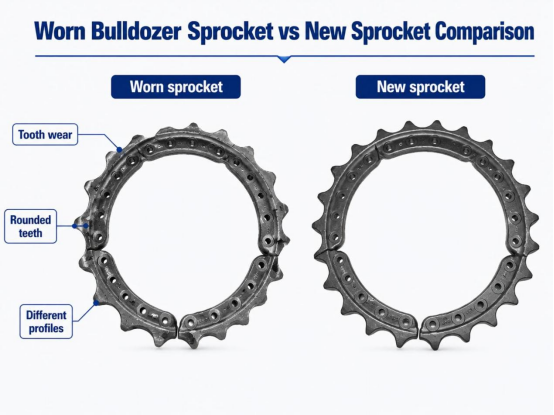
The most common sign of a worn bulldozer sprocket is damaged or reshaped teeth, including:
Rounded or thinner teeth
Uneven tooth profiles
Reduced tooth height
When sprocket teeth lose their original shape, they cannot properly engage with the track chain, resulting in inefficient power transmission.
A worn dozer sprocket may cause the track chain to lose proper contact, leading to:
Clicking noises
Irregular track movement
Reduced pushing force
Poor machine control
These issues indicate that the sprocket and track chain are no longer operating efficiently together.
Abnormal vibration or noise from the undercarriage area may indicate sprocket wear. A damaged sprocket can cause uneven rotation, increased component impact, and additional stress on the final drive system.
Severe operating conditions may cause tooth cracks, broken edges, or deformation. A sprocket with visible structural damage should be replaced promptly to prevent further equipment failure.
A worn sprocket can increase stress on other components, including:
Track chains
Track rollers
Idlers
Final drive components
Replacing a bulldozer sprocket at the right time helps avoid costly repairs and keeps the machine operating reliably.
The service life of a bulldozer sprocket varies depending on operating conditions, machine usage, and maintenance practices. There is no fixed replacement interval, but regular inspection can help identify wear early and avoid unexpected downtime.

Operating conditions have a major impact on sprocket wear.
Normal construction sites and soft soil usually cause slower wear.
Sand, gravel, and abrasive materials accelerate sprocket tooth damage.
Mining and rocky environments create higher impact and abrasion.
Bulldozers working in harsh environments require more frequent undercarriage inspections.
Operator behavior can also affect sprocket lifespan.
Frequent sudden reversing
Sharp turning
Heavy impact loading
Operation on uneven terrain
increase stress on sprocket teeth and accelerate wear.
Proper maintenance helps extend dozer sprocket service life. Key practices include:
Checking track tension regularly
Removing debris from the undercarriage
Inspecting track chain condition
Monitoring sprocket tooth wear
By maintaining the undercarriage system properly, equipment owners can reduce premature bulldozer sprocket replacement and improve machine reliability.
Continuing to operate with a worn bulldozer sprocket may reduce short-term maintenance costs, but it often leads to higher repair expenses and unexpected equipment downtime.
A worn sprocket can affect:
Driving efficiency
Traction performance
Pushing capability
Poor engagement between the sprocket and track chain may increase fuel consumption and reduce work efficiency.
Since the sprocket works together with track chains, rollers, and idlers, excessive wear can accelerate damage to other bulldozer undercarriage components, resulting in:
Shorter track chain service life
More frequent maintenance
Higher operating costs
A damaged sprocket may cause equipment failure and interrupt production, especially in mining, quarrying, and large-scale construction projects. Regular inspection and timely bulldozer sprocket replacement help maintain machine reliability and prevent costly downtime.
Replacing a bulldozer sprocket requires proper inspection, correct component selection, and accurate installation to ensure reliable machine performance and extend undercarriage service life.
Before replacement, check:
Tooth wear condition
Wear patterns
Cracks or structural damage
Compatibility with track components
A detailed inspection helps confirm whether replacement is necessary.
Selecting the correct dozer sprocket requires checking:
Bulldozer model
Track system specifications
Sprocket dimensions
Installation requirements
Using an incompatible sprocket may cause poor track engagement and premature wear.
Remove the worn sprocket carefully to avoid damaging related undercarriage components, including the track chain and final drive system.
During installation, ensure:
Correct alignment
Proper bolt tightening
Smooth engagement with the track chain
After installation, inspect:
Track movement
Operating noise
Machine stability
Overall performance
A correctly installed bulldozer sprocket helps maintain efficient operation and achieve longer service life.
A reliable sprocket should meet strict requirements in material, manufacturing process, and quality control.

Premium heavy equipment sprockets are typically made from wear-resistant alloy steel, offering:
High strength
Impact resistance
Extended service life
High-quality materials help sprockets withstand heavy loads and harsh working environments.
Proper heat treatment improves:
Surface hardness
Wear resistance
Fatigue strength
A well-treated sprocket can maintain reliable performance under demanding construction, mining, and earthmoving conditions.
A professional sprocket manufacturer should ensure:
Accurate dimensions
Correct tooth profiles
Proper installation fit
Precision manufacturing helps achieve smooth track engagement and reduces premature wear.
Reliable manufacturers perform quality checks such as:
Hardness testing
Dimensional inspection
Material analysis
Surface inspection
Strict quality control ensures consistent performance and helps customers receive durable dozer sprockets for long-term operation.
When replacing a sprocket, many buyers compare OEM and aftermarket options.
OEM sprockets usually provide original specifications but often come with higher prices and longer supply cycles.
High-quality aftermarket bulldozer sprockets can provide:
Reliable performance
Competitive pricing
Flexible supply options
Custom manufacturing solutions
For many equipment owners, choosing a professional aftermarket manufacturer is an effective way to reduce costs while maintaining performance.
YASSIAN provides durable aftermarket bulldozer sprockets with reliable quality and customized solutions for heavy equipment applications.
To maximize sprocket service life, follow these maintenance tips:
Incorrect tension can increase stress on sprocket teeth and track components.
Remove mud, rocks, and debris that may affect sprocket engagement.
Check sprocket condition together with:
Track chains
Rollers
Idlers
Replacing worn components before failure helps reduce total operating costs.
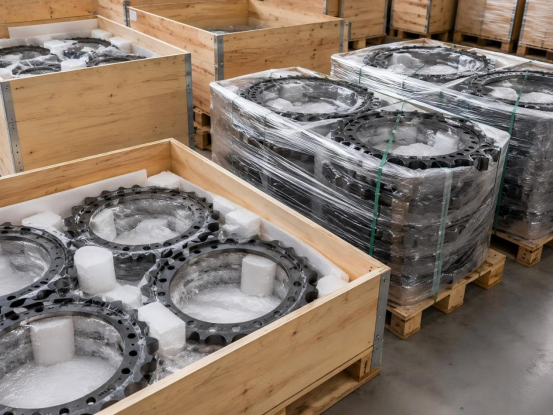
A bulldozer sprocket may be a small component, but it plays an important role in machine performance, undercarriage reliability, and operating costs. Regular inspection and timely replacement help prevent unexpected failures and extend the service life of the entire undercarriage system.
Choosing a reliable sprocket supplier with quality materials, precision manufacturing, and strict inspection standards can help equipment owners achieve:
Reduced downtime
Improved machine efficiency
Longer undercarriage service life
Lower maintenance costs
As a professional manufacturer of heavy equipment wear parts, YASSIAN provides durable bulldozer sprockets and customized solutions designed for demanding construction, mining, and earthmoving applications.


