
- All
- Product Name
- Product Keyword
- Product Model
- Product Summary
- Product Description
- Multi Field Search

For professional snow removal operations, the snow plow cutting edge directly determines plowing efficiency, fuel consumption, and maintenance frequency. Factors such as cutting edge material, edge profile, thickness, and sectional design all influence how well the plow performs on asphalt, concrete, gravel, or decorative surfaces. Selecting the wrong configuration often results in uneven wear, poor ice removal, and unnecessary downtime.
Based on long-term manufacturing data and field performance across multiple climate zones, this article explains how to choose the right snow plow cutting edge for your regional winter conditions, helping contractors and municipal fleets improve scraping results while reducing overall operating costs.
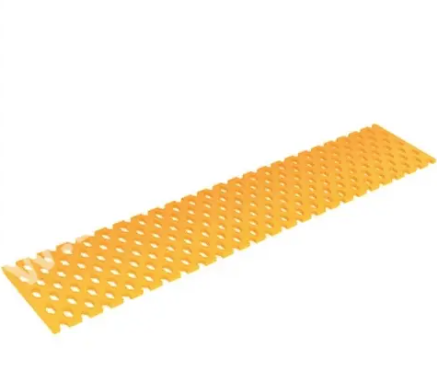
Snow Plow Blades Cutting Edges for Plowing
Different regions experience different combinations of:
Snow density (light powder vs. heavy wet snow)
Ice frequency
Temperature extremes
Road surface types (asphalt, concrete, gravel, decorative paving)
Operating hours per season
A cutting edge that performs well in northern Canada may fail prematurely in coastal areas or damage surfaces in warmer urban environments. Selecting the right material and design ensures optimal scraping performance, longer service life, and lower total cost of ownership.
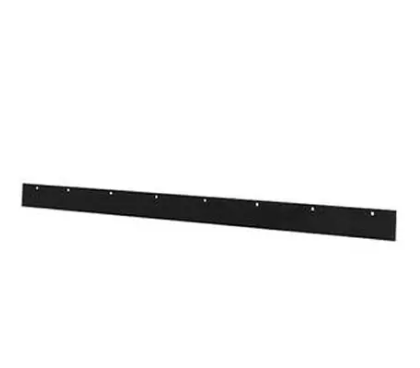
8′ Steel Snow Plow Cutting Edge Replacement All Brand
Best for: Extremely cold climates, heavy snowfall, ice-packed roads
Steel cutting edges remain the most widely used option in high-severity winter regions. Most standard steel edges are manufactured from heat-treated carbon steel, typically with hardness levels ranging from 360–500 HB, balancing wear resistance and impact strength.
In continuous plowing conditions—such as municipal highway routes—a properly installed steel cutting edge can last 400–700 operating hours, depending on pavement condition and snow density.
Advantages:
Strong penetration into compacted snow and ice
Maintains rigidity at temperatures below -20°C (-4°F)
Lower upfront cost compared to specialty materials
Widely compatible with OEM and aftermarket plows
Limitations:
Aggressive contact may accelerate wear on asphalt and concrete
Generates higher vibration and noise, especially at speed
Uneven wear on crowned or irregular road surfaces
Recommended regions: Northern U.S., Canada, Scandinavia, alpine and mountainous areas
Typical applications: Highways, arterial roads, long-distance municipal routes

Snow Plow Replacement Steel Cutting Edge
Best for: Urban areas, mixed winter conditions, surface-sensitive environments
Polyurethane snow plow cutting edges are engineered to balance flexibility and durability. Compared to steel, poly edges reduce direct surface impact while still maintaining consistent snow removal performance.
In city and commercial plowing, poly cutting edges often deliver 1.5–2 times the service life of steel when operating on smooth asphalt or concrete, particularly where ice accumulation is moderate rather than extreme.
Advantages:
Reduces damage to decorative concrete, stamped pavement, and curbs
Noticeably lower vibration and noise levels
Resistant to corrosion, salt, and chemical deicers
More forgiving during frequent stop-and-go operations
Limitations:
Less aggressive when breaking thick ice layers
Slightly higher initial cost than standard steel edges
Performance depends on correct edge thickness and plow down pressure
Recommended regions: Cities, residential neighborhoods, airports, parking facilities
Typical applications: Commercial lots, sidewalks, retail centers, noise-sensitive zones
Best for: Light snow, uneven terrain, gravel and unpaved roads
Rubber cutting edges are designed to flex rather than scrape aggressively. This flexibility allows the edge to ride over irregular surfaces, minimizing disturbance to gravel, brick, or aging pavement.
In rural and shoulder-season use, rubber edges are often preferred because they reduce material displacement and road damage. However, their average lifespan under heavy-duty use is typically 30–50% shorter than steel or poly options.
Advantages:
Excellent surface protection on gravel and uneven roads
Prevents stone throw and surface gouging
Very low noise and vibration
Ideal for early or late winter conditions
Limitations:
Limited effectiveness on hard-packed ice
Faster wear under high-speed or high-load plowing
Not suitable for continuous heavy snowfall routes
Recommended regions: Rural areas, unpaved roads, agricultural zones
Typical applications: Gravel roads, shoulders, transitional seasonal plowing
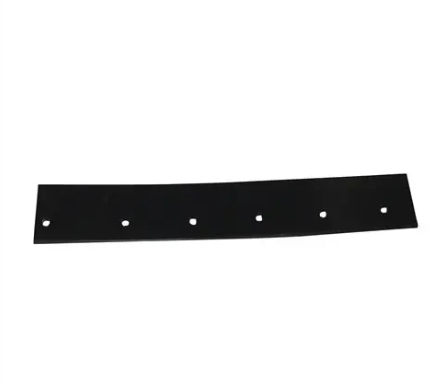
Snow Plow Cutting Edges 35in.W x 3in.H x 1/4in. thick
Best for: Extreme ice conditions, high-abrasion surfaces, long service life
Carbide-inserted cutting edges combine a steel base with tungsten carbide segments, one of the hardest wear materials used in snow removal equipment. In abrasive environments, carbide edges can last 3–5 times longer than standard steel, significantly reducing replacement frequency.
These cutting edges are commonly used by municipal fleets where downtime, labor costs, and mid-season replacements must be minimized.
Advantages:
Outstanding wear resistance on abrasive pavement
Superior ice penetration with consistent scraping performance
Longest service life among all cutting edge types
Reduced long-term replacement and labor costs
Limitations:
Higher initial investment
Requires precise plow alignment and proper down pressure
Less forgiving on delicate surfaces
Recommended regions: Ice-prone highways, northern interstates, industrial zones
Typical applications: Municipal fleets, high-mileage routes, extreme winter regions
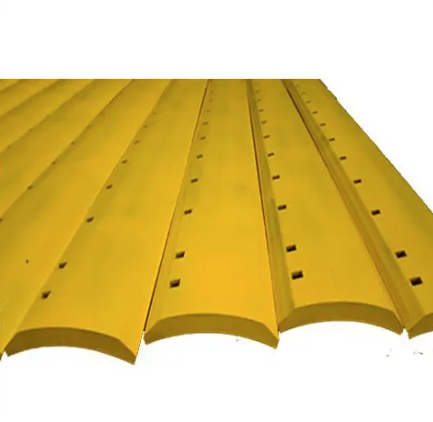
Tungsten Carbide Snow Plow Blade
Straight edges are cost-effective and simple but wear unevenly on crowned roads.
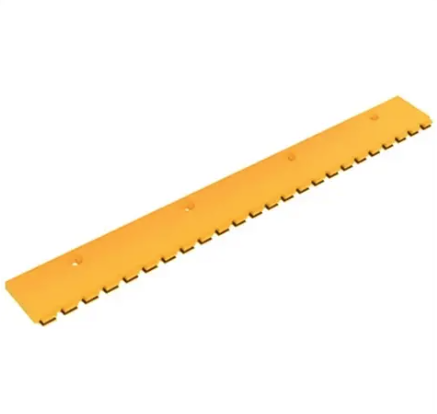
Sectional cutting edges conform better to road contours, improve scraping efficiency, and reduce edge wear.
For regions with uneven pavement or frequent freeze-thaw cycles, sectional cutting edges offer superior long-term performance.
Prioritize steel or carbide cutting edges
Focus on ice-cutting performance
Thicker edges extend lifespan in sub-zero temperatures
Poly or hybrid cutting edges reduce surface damage
Better adaptability to changing road conditions
Noise reduction and surface protection are critical
Poly or rubber cutting edges are preferred
Rubber edges prevent gravel displacement
Reduced maintenance costs in shoulder seasons
When sourcing snow plow cutting edges, look for manufacturers that offer:
Material traceability and quality control
Custom sizing and hole patterns
Consistent hardness and wear testing
Proven performance across different winter regions
A reliable manufacturer does more than sell parts — they help optimize your snow removal operation.
Selecting the right snow plow cutting edge for your regional winter conditions directly impacts efficiency, safety, and profitability. By understanding material options, terrain requirements, and climate challenges, operators can make informed decisions that deliver long-term value.
If you’re looking for custom snow plow cutting edges engineered for your specific region, working with an experienced manufacturer ensures you get the right balance of durability, performance, and cost.
Contact our technical team today to discuss your winter conditions and receive expert recommendations tailored to your snow removal needs.


